
One Deep Breath
A tidy breathing pacer with a usable free tier. Slow breathing has real research behind it; this app has none of its own, and most people won't need Plus.
A tidy breathing pacer with a usable free tier. Slow breathing has real research behind it; this app has none of its own, and most people won't need Plus.
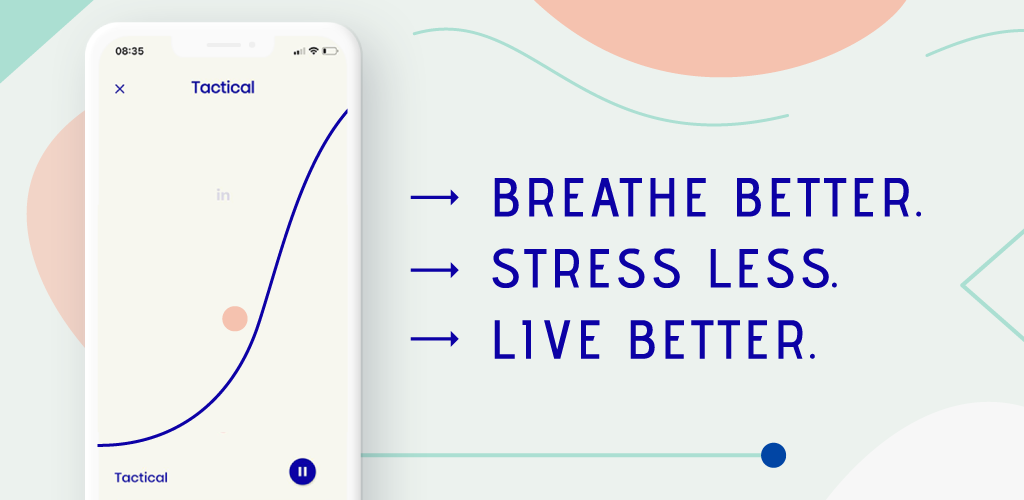
It's 3:10am and you know the drill: in for four, out for six. By the third breath you're drafting tomorrow's to-do list, by the fifth you've lost count, and by the eighth you're wondering whether that flutter in your chest is perimenopause or something worse.
The breathing isn't the hard part. Keeping the rhythm when your brain won't hold still is, and that's what a breathing app is for. The question, for something as free as breathing, is whether it's worth $48 a year.
One Deep Breath was built by a solo founder, Samuel Rystrom, and has been on the App Store since 2021. The app stores now list TCR Studios LLC, a Minnesota company, as the developer.
You pick a pattern by goal (calm, sleep, focus, energy) or by name: box breathing, 4-7-8, resonant breathing, alternate nostril, or a fast, Wim Hof-style round with breath holds. Then you follow an animation, sound cues, vibration, or any mix. You can build your own patterns, track streaks and add soundscapes. Plus adds a seven-day course.
Slow breathing has genuinely good evidence. A 2022 review of 223 studies found slow breathing raises the heart rate variability linked to your vagus nerve, during practice and over weeks. A 2023 meta-analysis of 12 randomized trials (785 adults) found breathwork lowered self-reported stress by a small-to-medium amount, though most studies had a moderate risk of bias. It's why our Analogs page starts there.
Not all patterns are equal. In the 2023 Stanford study of about 100 people, five minutes a day of cyclic sighing (a double inhale, then a long exhale) lifted mood more than mindfulness meditation over a month. Box breathing, one of this app's headline patterns, helped but didn't clearly beat meditation. Each group had only about 20 to 30 people. PubMed lists only about a dozen papers naming 4-7-8 breathing, and the meta-analysis found just two trials focused on fast breathing.
The app's own claims. One Deep Breath calls its exercises "science-based" and lists protocols for preventing panic attacks and lowering blood pressure. We found no published studies of the app itself, and no science page on its website. "Trusted by Navy SEALs" refers to techniques like box breathing, not an endorsement we could find. Its disclaimer says it isn't a medical device.
The tool has good research behind it; the app itself is untested. More on reading claims like these in The Science.
As of October 2026, it has 4.9 stars from 141 US App Store ratings and 4.5 stars from about 1,400 Google Play reviews. We found no Trustpilot page or independent expert reviews, and Reddit was blocked to us, so store reviews are what there is.
Reviewers like the range of patterns, the clear explanations, and the choice of visual, sound or vibration cues, which lets some breathe with eyes closed. Many call the free tier generous.
Complaints cluster around price (about $50 a year feels steep to several Android reviewers), a sign-in and trial screen before you see what's free, a 2023 to 2025 stretch with few updates, and, for a few, cues that are hard to follow with eyes closed. A handful describe being charged after a trial or struggling to cancel.
I'd use the free version for two weeks first, and set a reminder if you start a trial.
Prices as of October 2026.
Most of this comes from the app's own safety guidance.
Set a timer for five minutes and put the phone face down. Breathe in through your nose for a count of five and out for five, about six breaths a minute. If that's too much air, try four in and six out. When your mind wanders, start again at one.
If you keep losing count, that's the case for a pacer, and the free tier is a fine place to test it. If the timer works, you've just saved $48.
Partly. The download and a decent set of patterns are free. Plus, which the company says unlocks the full library, costs $9.99 a month or $47.99 a year on the US App Store after a free trial (as of October 2026).
For most people, the free version is enough. Plus suits daily users who want the full library and course. You're paying for variety, not different science.
Slow breathing has decent evidence for easing stress, and the app makes it easier. It isn't a treatment, and anyone prone to panic should avoid the fast and breath-hold patterns.
One Deep Breath is a thoughtful pacer for the one tool on this site with genuinely strong evidence. The Watch app helps at 3am, and $48 a year is modest next to most devices we review. But the research belongs to slow breathing, not the app, the privacy policy lists Meta ad tracking, and a free timer does the essential job. I'd start free, stick to the slow patterns, and pay only if the convenience keeps you practicing.
Five minutes of slow breathing tonight costs nothing. Start there.
A tidy, private iPhone breathing pacer from a solo French developer. Slow breathing has real evidence; the app's HRV, cortisol and lung claims are its own.
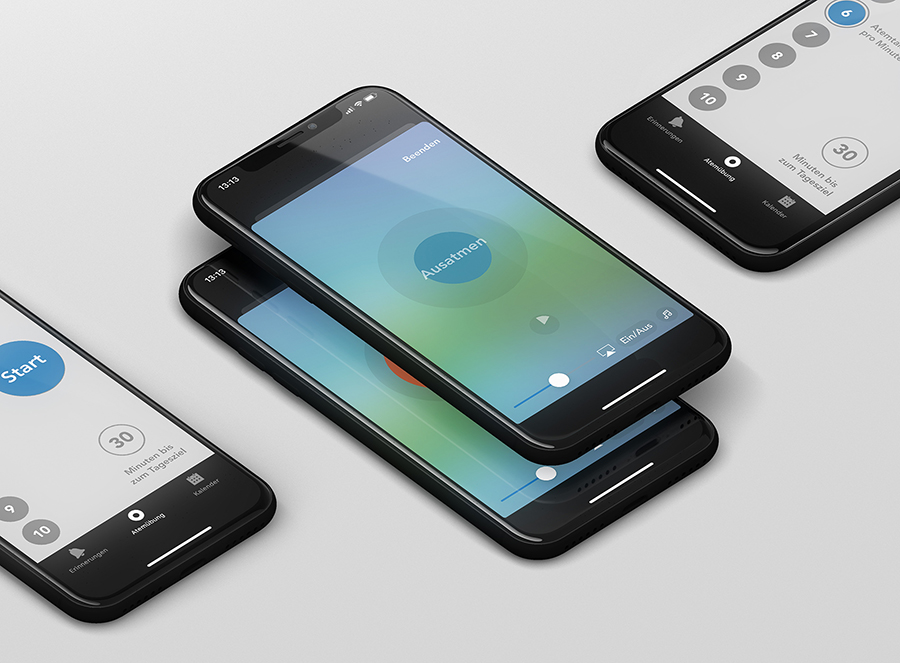
A German breathing pacer: $7.99 once, no subscription, no data collected. The rhythm has good research; the app has none of its own and hasn't been updated since 2022.
A huge, genuinely free library of meditations and sleep tracks, plus a timer that doubles as a breathing pacer. The catch: uneven quality and a pushier app than it used to be.