The short version
- What it is: a meditation app with a free library of guided meditations, sleep music and talks that Insight Timer puts at over 300,000 tracks, plus the bell timer it's named for.
- Price: free, no account needed. MemberPlus is $9.99 a month or $59.99 a year in the US after a 7-day free trial (as of October 2026).
- Best for: anyone who wants a calm voice at 3am without a subscription.
- Skip it if: you want something quiet and simple. The app now leads with goal-setting prompts, upsells and tip requests.
- The honest take: the "free, enormous library" claim holds up. Meditation has modest, real evidence for anxiety and some for sleep. It isn't a vagus nerve device, but its free timer makes a decent slow-breathing pacer.
"Just talk me back to sleep"
It's ten to four. You've already worked out how many hours are left until the alarm. You want a calm voice to talk you down, and you don't want to type in a credit card first.
That's when Insight Timer comes up, including in our own reviews, as the free, enormous alternative to paid apps and gadgets. So we checked. Is it actually free? And with that many teachers, how do you find a good one half asleep?
What it is and how it works
Insight Timer began in 2009 as a simple meditation bell timer built by developer Brad Fullmer. Australian brothers Christopher and Nicho Plowman bought it around 2015 and turned it into a library. The app stores now list Insight Network Inc., of Sausalito, California, as the developer.
Insight Timer says about 20,000 teachers upload their own recordings, adding close to a thousand new free meditations a week. It reviews content before publishing and bans AI-generated voices. That's a floor, not a quality filter.
- Search filters: length, type, male or female voice, and with or without background music.
- The timer: custom bells, including repeating bells from 5 seconds to 30 minutes apart. It works offline for everyone.
- Offline listening: downloading guided tracks needs MemberPlus, which matters if your phone goes into airplane mode at night.
- Extras: a Sleep Mode that locks your screen when a track ends, an Apple Watch app and Apple Health logging. No Wear OS app.
Anything for midlife women? Some. A perimenopause topic page gathers short free tracks on hot flashes, night sweats and mood, a yoga nidra for menopause, and a couple of five-day menopause courses. It also shows the library's range: the same page features a talk on facial reflexology for "balancing your hormones." None of it is medically reviewed or replaces a conversation about HRT.
What the evidence actually says
It isn't a vagus nerve device. A 2022 review of 223 studies found slow breathing raises the heart rate variability linked to your vagus nerve. A 2021 meta-analysis of 19 trials found mindfulness programs didn't reliably raise that marker compared with controls. If vagal tone is your goal, the breathing tracks matter more than the talks.
Anxiety: modest but real. A 2014 JAMA Internal Medicine review (47 trials, 3,515 people) found moderate evidence that mindfulness programs ease anxiety and depression by a small to moderate amount, and no evidence they beat drugs, exercise or therapy. A 2024 meta-analysis of 45 app trials found small drops in both.
Sleep and midlife. A 2019 meta-analysis of 18 trials found moderate evidence that mindfulness improves sleep quality versus time-matched activities, but not versus proven sleep treatments. A 2025 meta-analysis of 19 trials (1,670 women) found mindfulness programs eased menopausal symptoms, sleep and anxiety; the evidence was low to moderate quality, and these were courses, not apps.
Yoga nidra and body scans. A 2026 review of 73 yoga nidra studies found large effects on stress and anxiety, but its authors call the studies low quality and the effects likely inflated. Body scans on their own fared worse: a 2022 meta-analysis of 14 trials found a small effect on mindfulness and no clear benefit for health.
Slow breathing has the edge. In the 2023 Stanford study of about 100 people, five minutes a day of cyclic sighing lifted mood more than five minutes of mindfulness meditation.
Insight Timer's own research. A 2023 study of 10,409 users linked practicing four to seven days a week with better self-reported mood. It had no control group, and its lead author works for Insight Timer. A small independent 2023 trial found 10 minutes a day lowered anxiety, but only 18 app users were analyzed.
More on reading studies like these in The Science.
What users commonly report
As of October 2026, Insight Timer has 4.9 stars from about 447,000 US App Store ratings, 4.7 from about 263,000 Google Play reviews, and 4.2 from 166 Trustpilot reviews. Long-time users love the free library, the timer and the sleep content.
Recent complaints are consistent. Many of the newest App Store reviews, some from paying members, say a redesign buried the timer and bookmarks behind goal and intention prompts that can't be fully switched off, plus streak reminders, upsells and requests to tip the teacher. Others suspect new videos are AI-made, and a few Google Play reviewers say more tracks are going premium or leaning into pseudoscience. What reviewers call "ads" are mostly upsell screens.
Price, subscription and privacy (as of October 2026)
- Free: nearly all the library, the timer, sleep music, live classes and some courses.
- MemberPlus: $9.99 a month or $59.99 a year in the US. It adds most courses, offline downloads, a better player and premium-only tracks. No lifetime option is listed.
- Trial and cancelling: 7 days, then it auto-renews unless you cancel at least 24 hours before, wherever you subscribed. Deleting the app doesn't cancel. Insight Timer doesn't refund; Apple or Google decides.
- Teacher donations: optional, $1.99 to $99.99. Insight Timer says teachers get all of it, with a processing fee added on top.
- Privacy: Apple's label shows no tracking, but lists your name and email as used for Insight Timer's own marketing. Google Play's form says it shares your email and purchase history with third parties for advertising or marketing, and may collect optional "political or religious beliefs." The privacy policy says it doesn't sell your data or use it for targeted ads, and gives university researchers only de-identified data.
How to find the good stuff
- Search the practice, not the mood: "yoga nidra," "body scan," "sleep," or "coherent breathing" for bell-paced tracks at about six breaths a minute.
- Filter hard: under 10 minutes for 3am, 20 to 30 for bedtime, no background music if music keeps you awake.
- Check the numbers: a track with a high rating and thousands of reviews is a safer bet than a new one.
- Read teacher profiles: favor recognizable training, like MBSR or a clinical license.
- Bookmark two or three that work, so 3am you doesn't have to search, and silence the nudges in your phone's settings.
How it compares
Prices as of October 2026.
- One Deep Breath (free, or $47.99 a year): a dedicated breathing pacer with vibration cues, without a giant library.
- Muse (from $249.99): a headband that gives feedback while you meditate. The best evidence summary found only a small edge over ordinary meditation apps.
- Calm or Headspace (from $69.99 a year on the US App Store): more curated and polished, and mostly paid.
- Lumenate: a flashing-light app. Absorbing for some, off-limits with seizures or migraines, and not a sleep aid.
Who should skip it or go gently
- Trauma or PTSD. A 2020 review of 83 studies found meditation side effects, most often anxiety and low mood, in about 8% of participants overall, and a 2025 Brown University analysis linked trauma and PTSD symptoms to more of them. Try shorter, eyes-open practices, or a trauma-informed therapist.
- Severe anxiety or depression. Use it alongside treatment, not instead of it.
- Streaks stress you out. Reviewers say the prompts can be turned down but not off.
- New palpitations, night sweats or 3am panic. See your doctor first, including about HRT.
Try this free tonight
Before bed, open the timer, set it for five minutes and add a repeating bell every 5 seconds. Lie down, breathe in through your nose until the bell, then out slowly until the next. That's six breaths a minute, the pace the slow-breathing research favors.
If counting feels like work, search "yoga nidra," filter for 20 to 30 minutes, and let someone else talk. Neither costs a cent. More free tools are in the Analogs.
FAQ
Is Insight Timer really free?
Mostly. Nearly all the library, the timer, sleep music and live classes are free, with no account required. MemberPlus ($59.99 a year in the US, as of October 2026) adds most courses and offline downloads.
Insight Timer vs Calm: which is better?
Calm is more curated but mostly paid, from $69.99 a year. Insight Timer is free and far bigger, but uneven and busier. Start with the free one.
Is Insight Timer Member Plus worth it?
Only if you want a specific course or need offline downloads, say for airplane mode at night. Most people can build a practice on the free tier.
The bottom line
Insight Timer earns its reputation: a huge, genuinely free library and a timer that doubles as a breathing pacer. The evidence for meditation is modest but real; slow breathing's is stronger. You pay in attention instead of money: prompts, upsells and uneven content. I'd start free, bookmark a few well-rated tracks and pay only if a course earns it.
Tonight, set the bell to five seconds and breathe. That part was always free.
Similar listings in category
Explore More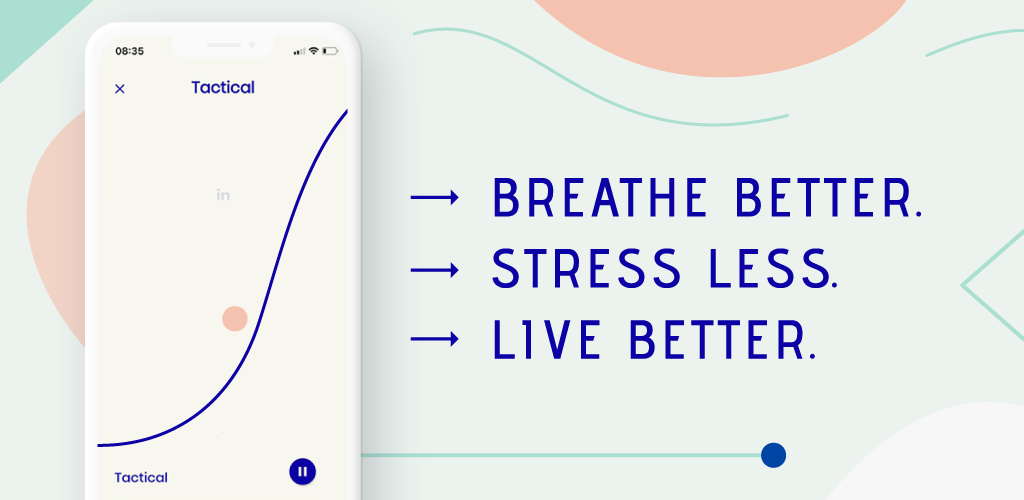
One Deep Breath
A tidy breathing pacer with a usable free tier. Slow breathing has real research behind it; this app has none of its own, and most people won't need Plus.
Moonbird: The Handheld Breathing Coach That Fits in Your Palm
Moonbird is a palm-sized device that physically expands and contracts in your hand to pace your breathing, with built-in HRV biofeedback. No screen, no gel, no electricity.
CalmiGo: Drug-Free Panic Relief in Three Minutes
CalmiGo is a handheld device that combines paced breathing, multi-sensory grounding, and calming scent to stop anxiety and panic attacks fast. Clinically validated and FSA/HSA eligible.