The short version
- What it is: an iPhone and iPad app that paces your breathing with an animation and bells, using six set rhythms or your own. It doesn't measure anything.
- Price: free to download. Upgrades run from $4.99 a month to $19.99, and the store doesn't say what's free (as of October 2026).
- Best for: people who want a clean, quiet pacer that collects nothing about them.
- Skip it if: you want your heart rate shown back to you, a watch app for 3am, or anything for Android.
- The honest take: a well-made, privacy-friendly pacer for the best-evidenced free tool on this site. The app's "HRV" and "lowers cortisol" promises borrow from slow-breathing research; nobody has tested the app.
Five to seven, outside Room 14
You're on a plastic chair outside a classroom at parent-teacher conferences. The couple ahead have been in there twenty minutes, you skipped dinner, and your heart is acting as if you're the one being graded. You know slow breathing helps. You also know you'll lose count by breath three.
That's the job Vagus+ does: an animation and a bell keep the count so you don't have to. The questions are what "Vagus+" adds to that, and whether it's worth paying for.
What it is and how it works
Vagus+ is made by Alexandre Naud, an independent French developer working alone. His App Store blurb says slow breathing helped his own stress and sleep, so he built the app in 2025. It's updated often, reaching version 7.6 in September 2026.
You pick a rhythm and follow the animation, with bell sounds marking each change:
- Basic (5-5): five seconds in, five out, which is six breaths a minute.
- Calm (4-6) and Sleep (4-8): longer out-breaths.
- Sleep+ (4-7-8) and Box (4-4-4-4): patterns with breath holds.
- Focus (6-4) and a custom rhythm.
You can change the length, theme, animation and bells, and there's a meditation section. It runs on iPhone, iPad, Apple silicon Macs and Vision Pro. There's no Apple Watch app, no Android version, and the listing doesn't mention vibration cues, so expect to watch a screen or listen for bells.
About that "HRV." The US subtitle reads "Breathwork, Stress, Sleep, HRV," but the app doesn't measure heart rate variability: no camera reading, sensor or Apple Health link. HRV is only a promised benefit. In France it's sold as "cardiac coherence," the idea HeartMath sells with a sensor that shows you the result.
Is this a vagus nerve tool?
Indirectly, like every breathing app. When you breathe out slowly, your heart slows a little, and that slowing is your vagus nerve at work (the Science explains why). Vagus+ stimulates nothing. It keeps time.
The plus is you.
What the evidence actually says
Slow breathing: genuinely good evidence. A 2022 review of 223 studies found slow breathing raises the heart rate variability linked to your vagus nerve. About six breaths a minute, the app's Basic rhythm, is the pace researchers have studied since around 2000 as "resonance" breathing. A 2023 meta-analysis of 12 randomized trials (785 adults) found breathwork lowered self-reported stress a small-to-medium amount, though most had a moderate risk of bias.
Not every pattern is equal. In the 2023 Stanford study of about 100 people, five minutes a day of cyclic sighing lifted mood more than mindfulness meditation; box breathing helped but didn't clearly beat it. PubMed lists only about a dozen papers naming 4-7-8 breathing.
The app's own claims. The listing says Vagus+ regulates your nervous system, improves HRV and lung capacity, lowers cortisol and improves digestion. It cites nothing, and we found no study of the app. Cortisol has some support: in a 2017 trial of 40 healthy adults, those who trained in slow breathing with a feedback device for eight weeks had lower cortisol afterward, while an untrained group's didn't change. Lung capacity and digestion are the thinnest of the list.
One distinction: the strong 2017 meta-analysis on HRV biofeedback (24 studies, 484 people) involved live heart-rhythm feedback. Vagus+ shows you nothing back, so that evidence belongs to the Trackers, not this app.
What users commonly report
As of October 2026, Vagus+ has 4.9 stars from 13 US App Store ratings, 4.9 from 70 in France and 4.9 from 34 in Germany. Written reviews are scarce: one on the US page and four on the French one. We found no Trustpilot page, Reddit threads or independent reviews.
Reviewers praise the clean design, easy customization and quick calm after a session; one French reviewer calls the paid version affordable. Product Hunt commenters asked for Android, and the developer, working alone, sounded doubtful. We found no complaints, but a handful of written reviews is a small sample, not a clean bill of health.
Price, subscription and privacy (as of October 2026)
- In-app purchases (US): Premium $9.99, Premium Plus $19.99, Premium Yearly $19.99, Premium Monthly $4.99, and a $4.99 "Coffee," which reads like a tip.
- What's free: not stated anywhere we could find. By their names, Premium and Premium Plus look like one-time unlocks, but Apple's listing doesn't say.
- Cancelling: subscriptions auto-renew unless cancelled at least 24 hours before the period ends, in your App Store settings. Refunds go through Apple.
- Privacy: Apple's label says the developer collects no data. The short, generic privacy policy says your data stays on your device, though third-party tools may log crash details, including your IP address.
I'd start free, then buy once rather than subscribe if the one-time options are what they look like.
How it compares
Prices as of October 2026.
- One Deep Breath (free, or $47.99 a year): more patterns, an Apple Watch app that taps the rhythm on your wrist, but a privacy policy that lists Meta ad tracking.
- Insight Timer (free): a giant meditation library whose bell timer, set to every 5 seconds, makes a free pacer.
- Moonbird ($179.99, 30-day returns): a palm-sized device that swells and shrinks so you can breathe with it eyes closed, in the dark.
- Free paced breathing: a timer and five-in, five-out is the evidence-backed part of all of these.
More low-tech options are in the Analogs.
Who should skip it or go gently
We found no safety guidance in the listing or terms, so here's ours.
- Panic disorder. Stick to Basic, Calm or Sleep, and skip the hold patterns if holding your breath leaves you feeling short of air.
- Asthma, COPD or another lung condition. Ask your doctor before the hold patterns.
- You feel dizzy or tingly. You're probably breathing too deeply. Stop and breathe normally.
- New palpitations or night sweats. Get checked first, and include HRT in the conversation. A 2013 trial of 218 women found paced breathing no better than a control for hot flashes.
- Screens at 3am wind you up. This one needs a screen; Moonbird or a watch app may suit you better.
Try this free tonight
Set your phone's timer for five minutes and put it face down. Breathe in through your nose for five and out for five, or four in and six out if that feels like too much air. When your mind wanders, start again at one.
If you lose count every night, that's the case for a pacer, and Vagus+ is a pleasant, private one to try.
FAQ
Is Vagus+ free?
The download is. Upgrades cost $4.99 to $19.99 on the US App Store (as of October 2026), and the listing doesn't spell out what stays free.
Does Vagus+ measure HRV?
No. Despite "HRV" in its subtitle, it has no camera reading, sensor or Apple Health link. It paces your breathing; HRV is a promised benefit.
Is Vagus+ good for anxiety and sleep?
Slow breathing has decent evidence for easing stress, and the app makes it easier. The app itself is untested and isn't a treatment.
Vagus+ vs One Deep Breath: which is better?
Vagus+ is simpler and collects no data, per its label. One Deep Breath has more patterns and an Apple Watch app. Same breathing either way.
The bottom line
Vagus+ is a calm, well-kept little pacer from one careful developer, and by its own label it collects nothing. The breathing it guides has real evidence; its HRV, cortisol and lung-capacity promises borrow that evidence rather than earn it, and there's no safety guidance. I'd start free, stay with the slow, no-hold rhythms, and pay once if it keeps you practicing.
Five in, five out. Tonight, before you open anything.
Similar listings in category
Explore More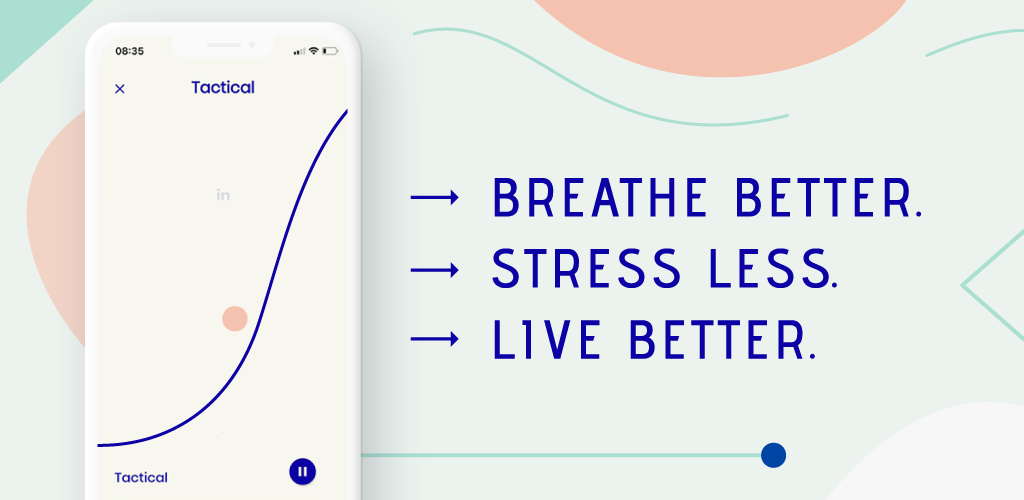
One Deep Breath
A tidy breathing pacer with a usable free tier. Slow breathing has real research behind it; this app has none of its own, and most people won't need Plus.
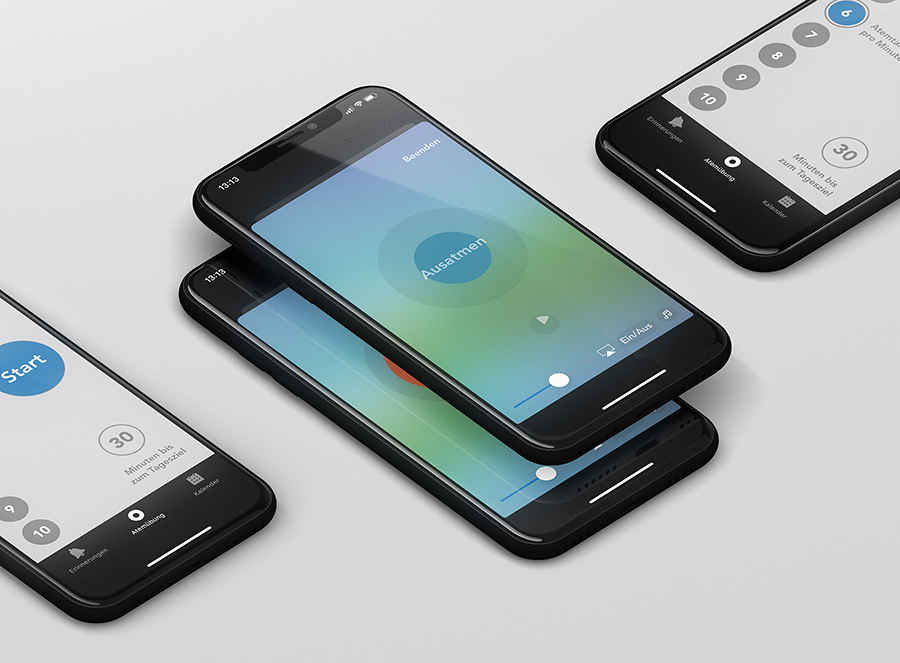
Vagusvit
A German breathing pacer: $7.99 once, no subscription, no data collected. The rhythm has good research; the app has none of its own and hasn't been updated since 2022.
Insight Timer
A huge, genuinely free library of meditations and sleep tracks, plus a timer that doubles as a breathing pacer. The catch: uneven quality and a pushier app than it used to be.