The short version
- What it is: a palm-sized device that swells as you breathe in and shrinks as you breathe out, so you can follow a slow pace with your eyes closed. A thumb sensor reads your pulse and heart rate variability (HRV) for the optional app.
- Price: $179.99, or $199.99 with a year of Premium; Premium alone is $49.99 a year (as of October 2026). 30-day returns.
- Best for: people who know slow breathing helps but lose count, or lose to the phone, at bedtime.
- Skip it if: a free timer already works, or you want a device with strong proof of its own.
- The honest take: a pleasant way to do the best-evidenced free thing on this site. Its own studies are small, and the one trial with a no-exercise group found no difference between groups. You're buying ease, not different science.
"If I pick up the phone, the night is over."
It's twenty to midnight. You've been in bed an hour, the duvet has been off and on twice, and your partner is asleep beside you, which feels slightly personal. A breathing exercise might help, but open an app and the screen lights up the room, there's an email waiting, and that's that.
That's the gap Moonbird aims at: a breathing guide you hold under the covers and follow without looking. Lovely idea. The question is whether a $180 pacer earns its place next to a free one.
What it is and how it works
Moonbird BV was founded in Antwerp, Belgium, in 2019 by siblings Stefanie and Michael Broes; Stefanie, a pharmaceutical scientist, says it began with her own insomnia. Assembly is in Antwerp, with some production in China. TIME named it a 2024 Best Invention, a design honor rather than a clinical one.
- The device: a smooth pod about the size of your palm. Shake it awake and it slowly expands for each in-breath and contracts for each out-breath. You set the timing in the app; without the app it repeats your last rhythm.
- The sensor: an optical sensor under your thumb reads heart rate and HRV, shown live in the app with a "coherence" score.
- The app: free exercises, custom rhythms and links to Oura, Apple Health and Google Health. Premium adds "Aura," an AI coach that, Moonbird says, reads your pulse and slows the pace if your heart rate isn't dropping.
- Battery: about two hours of use, roughly six 20-minute sessions.
Moonbird says three in four people respond best to a personal pace rather than six breaths a minute. That's its own user data, in a paper still under review: plausible, since ideal pace varies by person, but unchecked.
Is the HRV reading accurate? We found no published test against an ECG. Finger sensors do fine if you sit still; treat the numbers as a rough guide.
Is this a vagus nerve tool?
Indirectly. When you breathe out slowly, your heart slows a little, and that slowing is your vagus nerve at work (the Science explains why). Moonbird stimulates nothing. It's a metronome you feel rather than hear.
The device keeps time. Your exhale does the work.
What the evidence actually says
Slow breathing: genuinely good evidence. A 2022 review of 223 studies found slow breathing raises the heart rate variability linked to your vagus nerve, during practice and over weeks. A 2017 meta-analysis of 24 studies (484 people) linked HRV biofeedback to a large drop in self-reported stress and anxiety, though the authors wanted better-controlled trials. In the 2023 Stanford study of about 100 people, five minutes a day of cyclic sighing lifted mood more than mindfulness meditation. None tested Moonbird.
The sleep pilot (2022): small, no comparison group. Thirty-nine adults with self-reported insomnia, average age 43 and two-thirds women, used Moonbird for a month. Their sleep-questionnaire scores improved by about three points, and they reported falling asleep faster; that's the source of "37% better sleep quality." But there was no control group or objective sleep measure, and Moonbird's co-founder and a staff researcher were co-authors.
A lab comparison (2025). Thirty-six stressed young adults used Moonbird and a rival, the Hyperice Core, for 15 minutes each. Both raised HRV during use, neither left a lasting HRV change, and people felt no more relaxed with one than the other. Most preferred Moonbird, hence "79% preferred." Two Moonbird staff co-authored it; there was no sham.
The fairest test (2026). At the University of Antwerp, 62 young adults were randomly assigned to a breathing app, the app plus Moonbird, or no exercises, for two to three months. There were no differences between groups in daily mood, weekly stress or exam stress. The hint: after a tense day, people who practiced with Moonbird felt calmer the next day, more so if they liked using it. Moonbird supplied the devices free but had no role in the analysis. Its website mentions the hint, not the null result.
Beyond that: six case studies and an unpublished football pilot. Nothing in midlife women.
What owners commonly report
As of October 2026, Moonbird's claimed Trustpilot profile shows 4.7 stars from about 920 reviews. The apps are another story: Moonbird replaced its app in April 2026, and the new iPhone app has 2.3 stars from just four US ratings (3.7 from 39 in Belgium). Google Play and Amazon wouldn't load for us.
Happy owners describe calmer evenings, falling asleep sooner and kind customer service. Complaints cluster around price, a proprietary charging cable, app crashes, movement too subtle to feel, and slow wake-ups. Independent reviewers, often sent free units, liked the simplicity; some found matching the pace took practice.
Price, returns and privacy (as of October 2026)
- Device: $179.99 on Moonbird's US store; $199.99 with a year of Premium.
- Premium: $9.99 a month or $49.99 a year on the US App Store, after a 7-day free trial.
- Returns and warranty: 30 days from delivery, original packaging, free return label. Two-year warranty.
- HSA/FSA: after buying, you fill in a form and get a letter of medical necessity. Your plan decides; the IRS warned in 2024 that such letters don't automatically qualify. Ask first.
- Medical status: "not a medical device," per Moonbird. No FDA clearance.
- Privacy: health data is stored in the EU, and Moonbird says it doesn't sell personal information. But Aura's voice data goes to OpenAI and ElevenLabs, and session transcripts and emotion data to Google Gemini. Health data is kept two years after you delete your account.
How it compares
Prices as of October 2026.
- Free paced breathing: a timer and five-in, five-out covers the evidence-backed part.
- One Deep Breath: a pacer app with a usable free tier (Plus is $47.99 a year) and an Apple Watch app that taps the rhythm on your wrist.
- HeartMath Inner Balance ($249): an ear clip that shows your heart rhythm live, with 60 days to return it. Better for seeing feedback; Moonbird is better in the dark.
- Lief ($399, plus $14.99 a month for AI features): an ECG patch that buzzes you into slow breathing during the day. No returns.
- Apollo Neuro ($448 with a year of membership): vibrates to soothe but doesn't pace your breathing.
Devices that measure live in the Trackers.
Who should skip it or go gently
- Asthma, COPD or another lung condition. Moonbird says to check with your doctor.
- You get light-headed. Moonbird's manual says to breathe more shallowly and return to your natural pace.
- Irregular heartbeat. Optical sensors misread irregular rhythms, so ignore the HRV numbers, and get new palpitations checked.
- Scores make you anxious. Use it standalone and leave the app closed.
- You want hot flash relief. A 2013 trial of 218 women found paced breathing no better than a control. Talk to your doctor, including about HRT.
Try this free tonight
Lie on your side, rest a hand on your belly, and breathe in through your nose for about four seconds and out for about six. Feel your hand rise and fall: that's Moonbird's job, done in the dark by your own body. Ten breaths.
Do it nightly for two weeks. If the phone keeps winning, that's the case for a pacer. More free options are in the Analogs.
FAQ
Does Moonbird work?
It makes slow breathing easier, and slow breathing has good evidence. Moonbird's own studies are small, and the one trial with a no-exercise group found no difference between groups.
Is Moonbird worth it?
If the phone keeps derailing your bedtime breathing, $179.99 with 30 days to return it is fair. If a timer works, keep your money.
Moonbird vs HeartMath: which is better?
Moonbird paces you by touch, eyes closed; HeartMath shows your heart rhythm on a screen. For bedtime, Moonbird. For learning what moves your HRV, HeartMath.
Does Moonbird need a subscription?
No. Premium adds the AI coach and pace personalization.
The bottom line
Moonbird is the nicest version of a free thing: slow breathing in the dark, no screen, and the method has good research behind it. Its own studies are small and mostly company-linked, the one fair trial found no edge over an app or doing nothing, and the new app has had a bumpy start. With 30 days to return it, I'd try it if the phone keeps winning at bedtime.
Tonight, your own hand on your belly is a perfectly good moonbird.
Similar listings in category
Explore MoreVagus+
A tidy, private iPhone breathing pacer from a solo French developer. Slow breathing has real evidence; the app's HRV, cortisol and lung claims are its own.
One Deep Breath
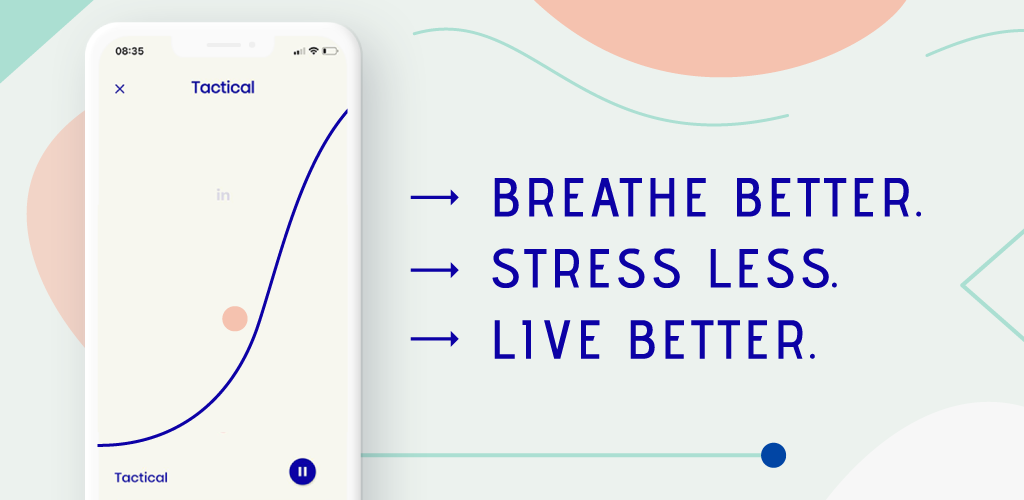
A tidy breathing pacer with a usable free tier. Slow breathing has real research behind it; this app has none of its own, and most people won't need Plus.
Vagusvit
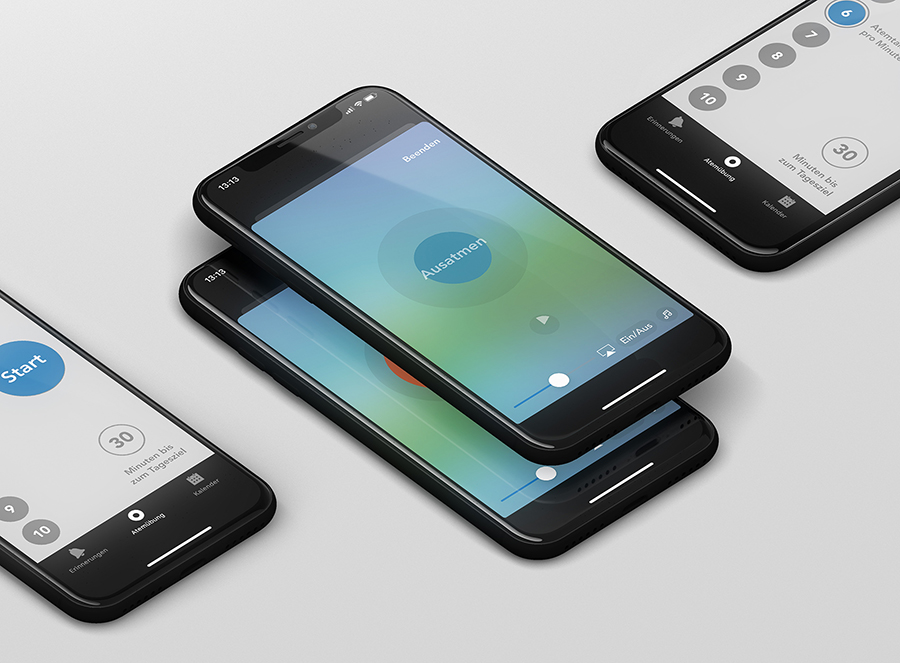
A German breathing pacer: $7.99 once, no subscription, no data collected. The rhythm has good research; the app has none of its own and hasn't been updated since 2022.