Lumenate
An app that flashes your phone's light at your closed eyes to paint vivid patterns. Absorbing for many, but not a vagus nerve tool or a sleep aid, and a firm no if light triggers seizures.
An app that flashes your phone's light at your closed eyes to paint vivid patterns. Absorbing for many, but not a vagus nerve tool or a sleep aid, and a firm no if light triggers seizures.
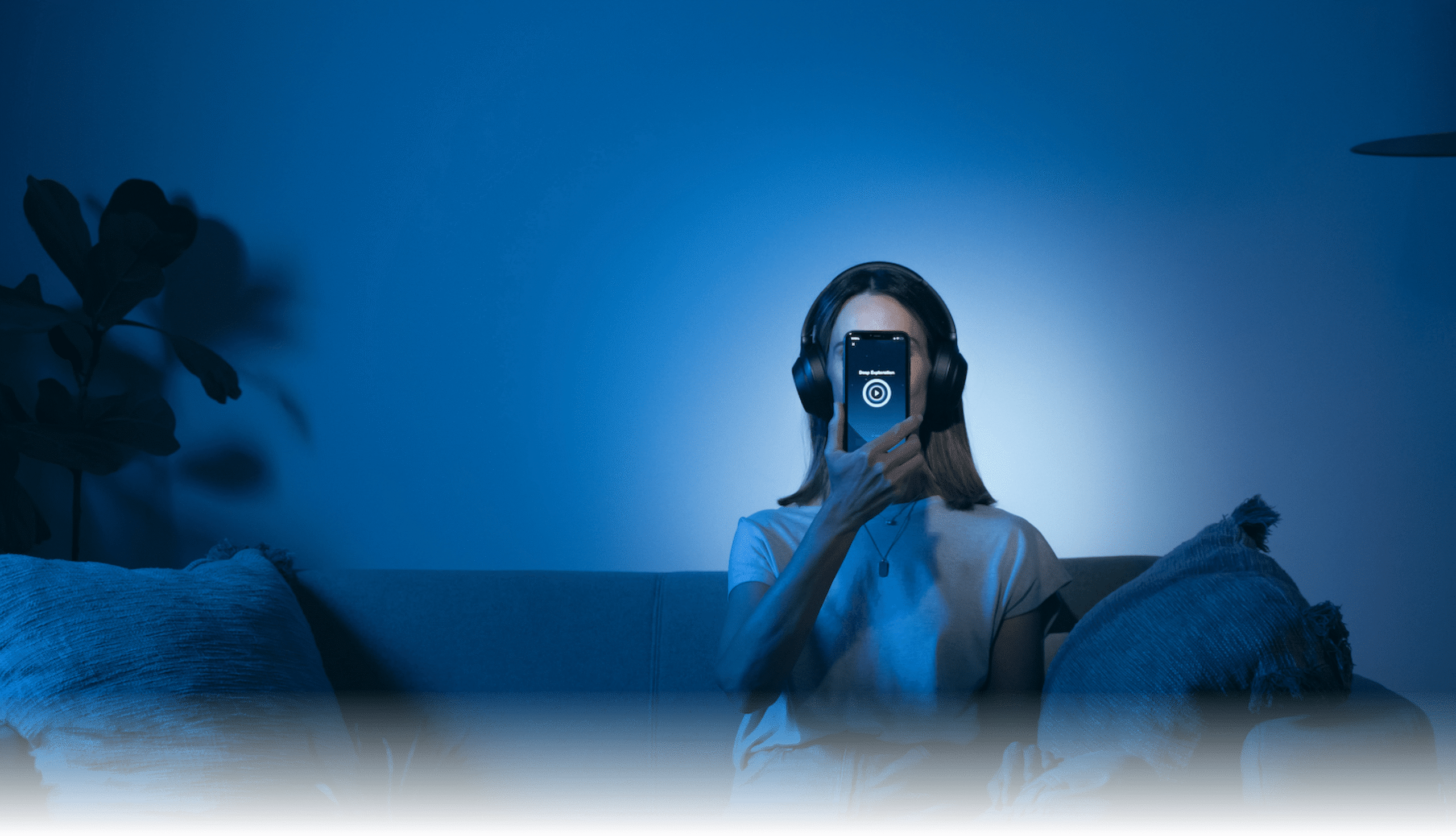
It's 9pm. You've opened the meditation app, closed your eyes, and within three minutes you're rewriting tomorrow's email in your head. The voice tells you to notice your thoughts. You've noticed them. That's the problem.
Lumenate makes a different offer. Instead of asking a busy mind to go quiet, it gives it something louder to watch.
Lumenate Growth Ltd, based in Bristol, England, launched the app in 2021. In a dark room, you hold your phone 5 to 10 cm from your closed eyes and press play. The flashlight pulses in set rhythms while music or a guided voice plays. Lumenate says only plain white light reaches your eyelids; the colors and shapes come from your own visual system.
The company calls this flicker light stimulation and says your brainwaves fall into step with the rhythm. It says its sleep sessions flicker at around 3 flashes a second, and there are almost 50 sessions.
The marketing leans on psychedelics: the App Store subtitle is "Psychedelic Meditation," and the site promises a "semi-psychedelic" state, no substances involved. Lumenate's terms say it isn't a medical device and isn't meant to diagnose or treat anything.
No. Lumenate works through your eyes and visual brain, and doesn't claim otherwise. It's here because readers ask, and because getting out of your own head is part of calming a fried nervous system. File it under "absorbing experience," not "treatment."
Flashing light on closed eyes reliably produces vivid patterns. That part is solid. But most studies Lumenate cites come from one Berlin lab, using lab strobes on small groups of young, healthy, screened volunteers.
So: the visuals are documented; the wellbeing claims aren't. More on reading studies like these in The Science.
As of October 2026, the app has 4.6 stars from about 9,700 App Store ratings and 4.4 from about 8,700 Google Play reviews. On Trustpilot, Lumenate has 4.1 from just 46 reviews, mostly about Nova.
Fans describe vivid colors, a quieter mind afterward, and something that holds their attention when sitting meditation never did, often at bedtime. Complaints cluster around paying for the mask and then a subscription, aching arms from holding the phone, Nova Bluetooth trouble and light leaking around the mask. One 2024 App Store reviewer described what they believed was a first seizure after several nights of use.
Lumenate's own risk information, terms and pre-purchase checklist rule it out, or urge caution, if:
If twitching, confusion or strong dizziness starts mid-session, Lumenate says to cover one eye, drop the phone or turn it face-down, and see your doctor before trying again.
Sit somewhere dim. Rub your palms together until they're warm, then cup them gently over your closed eyes without pressing. Breathe in through your nose for a count of four and out for a count of six. Rest your attention on the dark behind your hands and whatever drifts across it. Ten rounds, then lower your hands slowly.
It's Lumenate's trick, giving a busy mind something to watch instead of something to solve, minus the strobe. It works at 3am and needs no safety screening. More ideas in the Analogs.
For most healthy adults, Lumenate says yes, but its exclusion list is long, from family epilepsy to sleep deprivation and panic attacks. Read the Medical Risk Info in the app's settings first.
The download and 7-day trial are, but the trial needs payment details and auto-renews. After that, only a few sessions stay free.
At producing vivid visuals, yes. For stress, anxiety or sleep, there are no published trials, only user reviews and a company survey.
No drugs are involved. Lab volunteers rated the visuals as comparable in intensity on some scales, but Lumenate's own science page says the effects aren't equivalent.
Lumenate is a strange and, for many people, lovely experience: a light show painted by your own brain. The visuals have real science behind them; the calm has reviews and a company survey. It isn't a vagus nerve tool, a sleep aid or an anxiety treatment, and its own warnings rule out many of the people most likely to want it.
If you're curious, rested and migraine-free, I'd try the free week early in the evening, sitting up, with a day-five reminder to decide. If 3am is the problem, I'd start with no flashing lights at all.

A pretty bedside sunrise alarm and sound machine that nudges better sleep habits. The research behind it is thin, and setup pushes you into a subscription trial.
A light-and-sound headset for guided 20-minute rests. Many owners find it calming, but it's costly, thinly studied, not a vagus nerve tool, and a no if flashing light affects you.
A sound app that aims to walk your brain from stress into deep rest. Loyal fans, big claims, tiny studies, and refunds that are hard to come by.