The short version
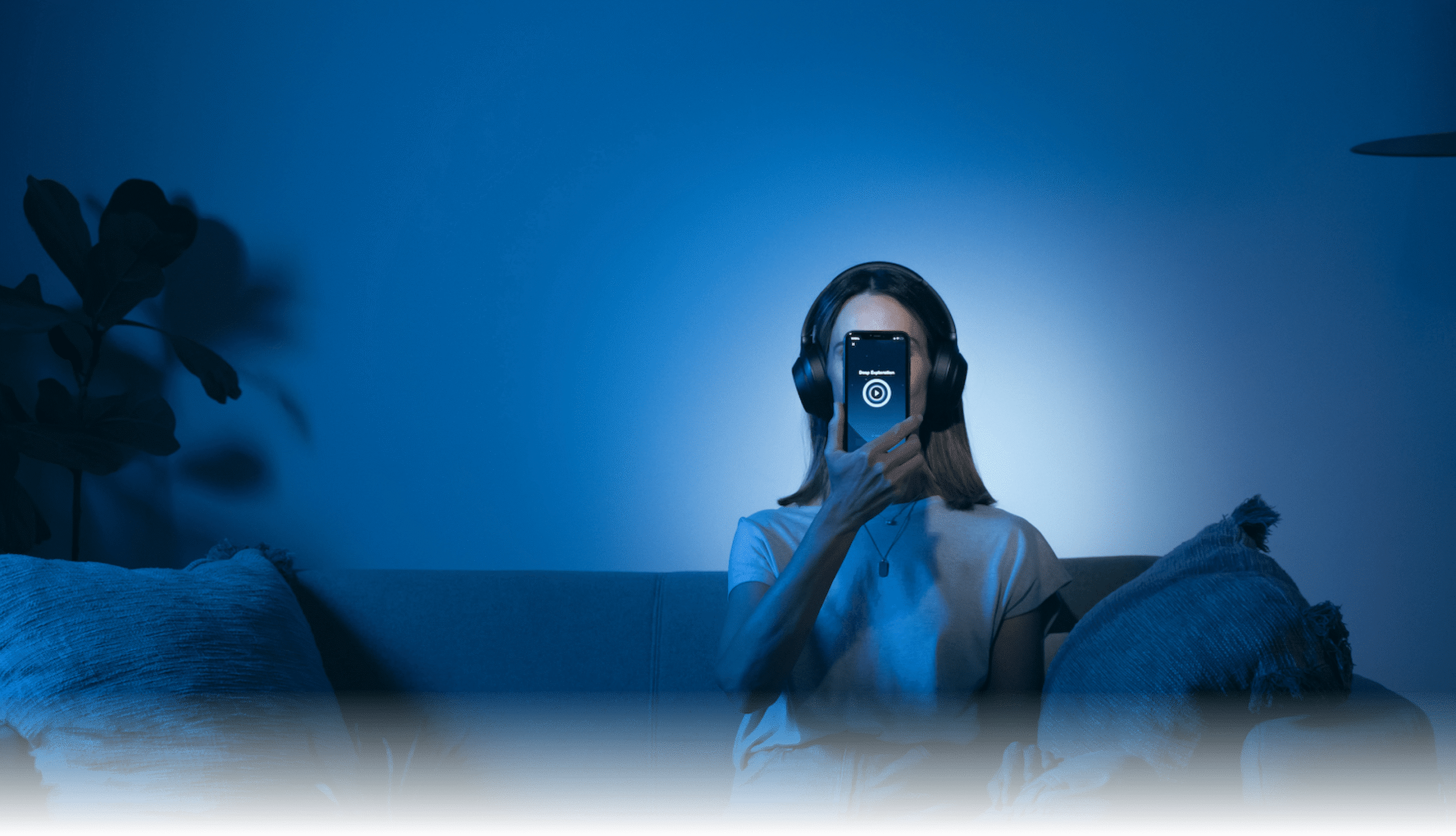
- What they are: tools that work through your eyes and ears instead of your skin. Think flickering light, rhythmic sound, or both together.
- Examples: Lumenate, an app that flickers your phone's light at your closed eyes in time with music; BrainTap, a headset that pulses light and tones; and the Hatch Restore, a bedside sunrise alarm and sound machine.
- What it feels like: with flicker, vivid colors and moving patterns behind your eyelids. With sound, whatever the soundtrack does to you. With a sunrise alarm, a slow glow instead of a jolt.
- The evidence: the experiences are real and well documented in labs. The claims that they ease stress, anxiety or sleep problems are thin.
- Best for: people whose minds won't quiet in ordinary meditation and who want something absorbing to focus on.
- Skip the flashing ones if: you or a close relative has epilepsy, flashing light has ever made you twitch or black out, or you get migraines.
Something to watch instead of something to solve
Some nights, the problem isn't your body. It's the loop: the email you should have worded differently, the appointment you forgot to book, the thing your mother said on the phone. Telling that mind to be quiet rarely works. Giving it something else to do sometimes does.
That's the idea behind this category. Instead of nudging the vagus nerve, these tools give your eyes and ears something absorbing enough to crowd out the loop for a while.
How they work
- Flickering light. A light pulsing at a steady rhythm in front of closed eyes makes your visual system produce colors and geometric patterns that aren't really there. Researchers have studied the effect for decades, and it's reliable. Lumenate turns your phone's flashlight into that light source.
- Rhythmic sound. Some apps and headsets use pulsing tones or "binaural beats," two slightly different tones in each ear, and claim they nudge your brainwaves toward calmer states.
- Light and sound together. Headsets like BrainTap combine the two and are sold for relaxation, focus and sleep.
- Gentle light and steady sound. Sunrise alarms and sound machines like the Hatch Restore skip the flicker: a dimming glow at night, a slow dawn in the morning and steady noise in between.
Is this vagus nerve stuff?
No. These tools work through your eyes, ears and brain, not your vagus nerve. They're here because getting out of your own head is part of calming a fried nervous system, and because readers ask about them. Treat them as an absorbing experience, not a treatment.
What the evidence says
- Flicker visuals: well documented, mostly in small lab studies of young, healthy volunteers using lab strobes. Our Lumenate review goes through those studies, several of which had Lumenate funding.
- Brainwave claims: shakier. A 2023 systematic review of 14 studies on binaural beats found that five supported the idea that they shift brainwaves, eight contradicted it and one was mixed.
- Light-and-sound headsets: small studies, mostly close to the companies. Our BrainTap review found none against a sham headset.
- Sound machines and dawn light: a 2021 review of 38 studies rated the evidence that continuous noise helps sleep as very low quality, and dawn-light studies are small. Our Hatch Restore review has the details.
- Stress, anxiety and sleep: we found no published trial of a phone flicker app for any of them.
So the experiences are real and the benefits are unproven. More on reading claims like these in the Science.
Who should skip this, or ask first
- You or a close relative has epilepsy, or flashing lights or screens have ever caused twitching, a blank spell or confusion. The UK's Epilepsy Society says flashes between 3 and 30 times a second are the most common triggers for photosensitive epilepsy, and some people are photosensitive without knowing it.
- You're short on sleep. Lumenate's own risk information says sleep deprivation lowers the seizure threshold. If you've been awake since 3am, flicker isn't the tool for tonight.
- You get migraines. Flashing light is a common migraine trigger, and perimenopause can bring more attacks.
- You have panic attacks or dissociation. Lumenate says strobe light can trigger anxiety or dissociation.
- You use headphones in bed. Keep the volume low, especially if you might fall asleep with them on.
Try this tonight
Sit somewhere dim. Rub your palms together until they're warm, then cup them gently over your closed eyes without pressing. Breathe in through your nose for a count of four and out for a count of six, and rest your attention on the dark behind your hands. Ten rounds, then lower your hands slowly. It's the same idea, giving a busy mind something to watch, with no flashing and no screening.
The bottom line
The light-and-sound tools are the most fun corner of this directory, and among the least proven. If you're rested, migraine-free and curious, they can be a lovely change from sitting in silence with your thoughts. If 3am is the problem, start with the Analogs instead. Slow breathing doesn't flash.