The short version
- What it is: guided audio sessions plus an optional headset that pulses light at your closed eyes and ears in time with rhythmic tones.
- Price (as of October 2026): the app is $29.99 a month or $260 a year after a 14-day free trial. The headset adds $797, or $907 bundled with the first year.
- Best for: people who can't switch off for a nap and want a voice to carry them through 20 minutes of rest.
- Skip it if: you or a close relative has had seizures or blackouts, flashing light bothers you, or you get migraines. BrainTap's own warning says strobe lights like its headset's can, very rarely, trigger seizures even in people who've never had one.
- The honest take: many owners love the guided rest, but the studies are small and close to the company, it isn't a vagus nerve tool, and cancelling is harder than "cancel anytime" suggests.
The 3pm wall
You slept in three pieces last night. It's mid-afternoon, there's a meeting at four, and a nap never works because the moment you close your eyes, the to-do list starts reading itself aloud.
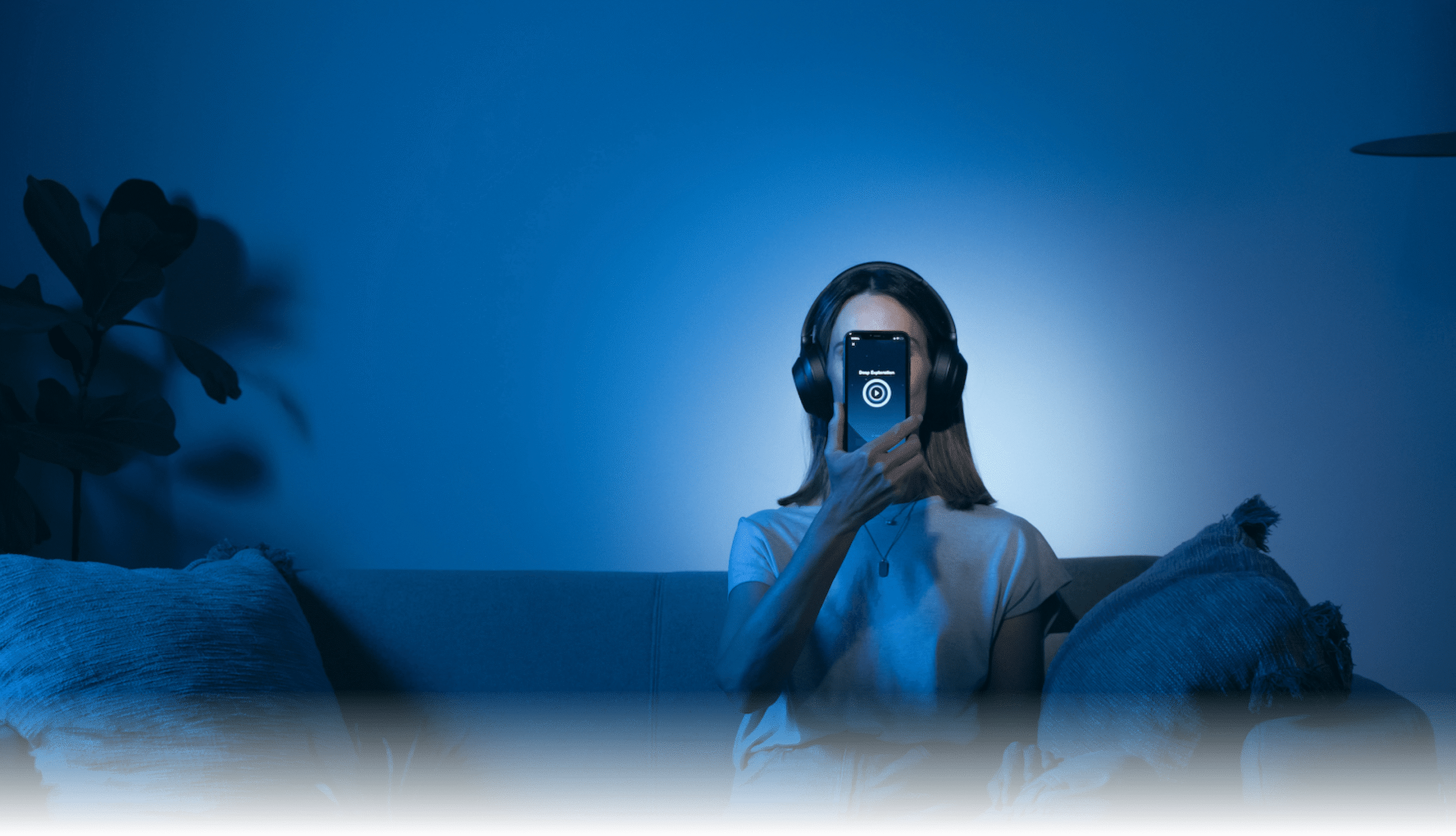
BrainTap is built for that moment: headset on, visor down, and a voice, music and pulsing lights take over for 20 minutes. Its founder wrote in 2017 that 20 minutes of this kind of brainwave training can equal a few hours of sleep. That's a big promise attached to a big price.
What it is and how it works
BrainTap Technologies, Inc., of New Bern, North Carolina, was founded in 2014 by CEO Patrick Porter, PhD, who earlier founded the Positive Changes chain of lifestyle-improvement centers. His own site says his doctorate, from Louisiana Baptist University, is in the psychology of Christian counseling. Worth knowing, since the marketing leans hard on "neuroscience." It's sold direct and through practitioners, including many chiropractors.
- The app: more than 2,000 sessions mixing guided visualization, music, binaural beats and isochronic tones (sound that pulses on and off). It works with any headphones.
- The headset: foldable Bluetooth headphones with a visor. Blue LEDs in the visor, and blue and red ones in the earpieces, pulse in time with signals embedded in the app's audio. With other audio, or without a subscription, it's just headphones.
BrainTap calls this brainwave entrainment: pulses that walk your brain from alert beta rhythms into drowsy theta.
The marketing goes further. BrainTap calls the ear lights "auricular therapy," and a 2018 company blog post says light can activate the ear "meridians" acupuncturists needle. The homepage quotes Gwyneth Paltrow calling it "amazing," and podcaster Ben Greenfield has said 20 minutes feels like a two-hour nap. Yet BrainTap's terms say its devices aren't meant to treat anything, and we found no FDA clearance.
Is this a vagus nerve tool?
No. Like everything in our light and sound category, it works through your eyes and ears, aiming at brainwaves. Still, a recent magazine profile of Porter described it as stimulating the vagus nerve in the ear canal. The ear-clip vagus devices in this directory use a mild electrical current; BrainTap's earpieces hold LEDs, and we found no published evidence that LED light on the ear stimulates the vagus nerve.
Deep relaxation does nudge your body toward rest-and-digest, which is vagus territory. So do a lot of things.
What the evidence actually says
BrainTap's science page says it's "proven in 12 studies." What we found:
- The 38.5% stress figure (2020): after one 20-minute session, 100 adults had higher heart rate variability (HRV) and a "stress index" about 38% lower. That index comes from heart rhythm, not how stressed anyone felt. Nobody lay quietly for 20 minutes as a comparison, two of its authors are Porters, and it appeared as a conference abstract, not a full paper.
- Sleep (2026): 26 medical students in India did one session; a smartwatch scored their sleep before and after, with no comparison group. Porter co-authored it under a BrainTap affiliation, yet the paper declares no conflicts.
- The strongest design (2026): 84 women with fibromyalgia in Brazil were randomly assigned eight weeks of BrainTap or music therapy. Both groups improved on several measures; the abstract reports changes within each group, not a clear win for the headset. Brazilian research funders paid for it, and one co-author worked for BrainTap as of 2021.
We found no trial against a sham headset, none comparing the headset with the app alone, and nothing showing 20 minutes equals hours of sleep. Even a 2025 review co-written by Porter calls for larger studies with robust control groups.
The underlying idea is unsettled too. A 2023 systematic review of 14 binaural-beat studies found five supported brainwave entrainment, eight contradicted it and one was mixed. More on reading studies like these in The Science.
What owners commonly report
As of October 2026, BrainTap scores 4.0 on Trustpilot from 67 reviews, but it's polarized: 55% five-star, 28% one-star, and BrainTap invites customers to review. The app has 4.5 stars from 435 App Store ratings and 4.1 from 366 Google Play reviews.
Fans describe feeling calmer, sleeping better, a real midday reset and a huge library. Complaints cluster around money and support: charges after cancelling, slow refunds, unreturned calls, sessions that buffer, and dead headsets with only a paid replacement offered. The Gadgeteer's 2021 review, on a free sample, liked the sessions more than the hardware for the price.
Price, subscription, returns and privacy (as of October 2026)
- App: 14-day free trial, then $29.99 a month or $260 a year. A subscription is required.
- Headset: $797 on top of a subscription, or $907 bundled with the first year. With $260 renewals, three years costs about $1,427.
- Cancelling: the pricing page says "cancel anytime," but the terms require 30 days' notice, counted from your next payment date, so monthly members pay once more after cancelling. Free trials can be cancelled any time before the first charge.
- Returns: headsets bought direct can go back within 45 days of delivery, with a 15% restocking fee (about $120) and your own postage. Subscription fees aren't refundable. Bought from a practitioner? Their policy applies.
- Warranty: 12 months for defects. Afterward, no repairs, only a paid trade-in.
- HSA/FSA: we found no mention on BrainTap's site.
- Privacy: Apple's label says your name, email and phone number may be used for BrainTap's own marketing, with nothing listed as tracking. Google Play says nothing is shared with third parties.
How it compares
- Lumenate: also flicker, and also a firm no with seizures. A free week, then a paid plan (US App Store tiers $6.99 to $79.99): a far cheaper way to learn whether light and sound suits you.
- Muse 2 ($249.99): listens to your brain instead of flashing at it, and its core feedback needs no subscription.
- A plain meditation app: Insight Timer's core library is free and enormous.
- Free slow breathing: about six breaths a minute is the pace HRV biofeedback trains, and it works directly on the heart rhythm your vagus nerve controls.
Who should skip it
BrainTap's own warnings cover:
- Seizures or blackouts, including family history. See your doctor first; BrainTap says people prone to seizures shouldn't use the lights at all. Epilepsy, brain injury, "mental impairment" or light sensitivity also mean asking first. Stop and see your doctor if you notice twitching, convulsions or lost awareness. The UK's Epilepsy Society says 3 to 30 flashes a second are the common triggers, 16 to 25 the most likely; BrainTap's own HRV study describes lights flickering from 18 down to 0.5.
- Pregnancy, any medication or a medical condition. Check with your doctor first.
- Drugs or alcohol. Don't use it under the influence.
Beyond BrainTap's list:
- Migraine. BrainTap doesn't mention it, but the NIH lists flashing lights as a trigger, and the American Migraine Foundation says perimenopause can bring more attacks.
- You want treatment. BrainTap says it isn't one. For insomnia, palpitations or anxiety, talk to your doctor.
The FDA's public adverse-event database holds one secondhand, unverified 2023 report of a child's seizure linked to BrainTap. We found no pacemaker warning; it sends light and sound, not current.
Try this free tonight
Set a timer for 20 minutes. Lie on your back with a pillow under your knees and a folded scarf over your eyes. Breathe in for four and out for six, ten times. Then move your attention slowly from your toes to your scalp, naming each part silently. If you drift off, good. When the timer goes, sit up slowly.
That's the core of what BrainTap sells, minus the flashing and the $907. More ideas in the Analogs.
FAQ
Does BrainTap work?
For relaxing during a session, many owners say yes. For the bigger claims, the studies are small, mostly uncontrolled and often company-linked, and we found none that used a sham headset.
Is BrainTap safe?
BrainTap says yes, with caveats: its own warning says strobe lights like its headset's can very rarely trigger seizures, even in people who've never had one. Ask your doctor first if you're pregnant, on medication or have any seizure history.
How much is the BrainTap subscription?
As of October 2026, $29.99 a month or $260 a year after a 14-day trial. The headset is extra, and cancelling takes 30 days' notice.
Is BrainTap worth the money?
Not as a first step. Try the app on your own headphones. If guided rest helps, the $797 visor is an add-on with no evidence it beats the app alone.
The bottom line
BrainTap wraps something genuinely useful, a guided 20-minute rest, in a lot of marketing: ear "meridians," celebrity quotes and sleep math no study we found supports. Its research is small and close to the company, the seizure warning is real, and the full kit runs about $1,400 over three years.
If the afternoon wall or a racing mind at bedtime is the problem, I'd start with the free lie-down above for a week. If you want a voice to guide you, I'd try the BrainTap trial on your own headphones and decide by day 12. I'd add the visor only once a doctor has ruled out seizure risk and the app alone has earned its keep.
Similar listings in category
Explore More
Hatch Restore
A pretty bedside sunrise alarm and sound machine that nudges better sleep habits. The research behind it is thin, and setup pushes you into a subscription trial.
Lumenate
An app that flashes your phone's light at your closed eyes to paint vivid patterns. Absorbing for many, but not a vagus nerve tool or a sleep aid, and a firm no if light triggers seizures.