The short version
- What it is: a handheld device you breathe out into. Lights and vibration coach a longer exhale, you breathe in over a scent plate, and a session takes three minutes.
- Price (as of October 2026): $349 once for Lifetime, or $218 a year, or $369 for two years. HSA/FSA eligible, CalmiGo says.
- Best for: people who know a long exhale helps but lose the rhythm mid-panic.
- Skip it if: strong scents tighten your chest, you hate app-tethered gadgets, or you need treatment for panic disorder.
- The honest take: a sensible idea, well packaged. But "calm in 3 minutes" is the session length, not a finding, and in the largest trial free written instructions did about as well.
Fourth in line at the pharmacy
You're picking up your mother's prescriptions on the way home, fourth in line, when your chest tightens and your hands go cold. The line isn't moving. Everyone feels too close. You know the drill: breathe out, slowly. Your body has other plans.
CalmiGo is built for this moment. Its site promises calm "in 3 minutes" and calls the device "clinically proven" for anxiety, panic attacks and PTSD. We checked what's underneath.
What it is and how it works
CalmiGo comes from Dendro Technologies, with development in Israel and an office in New York. Adi Wallach, a Technion-trained biomedical engineer who had panic attacks as a student, founded it with her mother, Dr. Orna Levin, a physician focused on herbal medicine and acupuncture. It launched in 2019 and was once called myReLeaf.
You breathe out through a mouthpiece. CalmiGo says it learns your pattern, then lights and a vibration signal when you've hit a target exhale, nudging it longer. You breathe in through your nose over a solid scent plate: lavender, peppermint or bergamot. Repeat for three minutes. The lights, buzz, smell and weight in your hand are what CalmiGo calls "grounding."
It's activated in CalmiGo's app, then works without your phone, though the FAQ says it locks if it goes too long without syncing.
CalmiGo calls itself a "low risk wellness device." In plain English, the FDA hasn't reviewed it, and we found no FDA clearance.
Is this a vagus nerve tool?
Only the way slow breathing is. Each out-breath slows your heart through the vagus nerve, and a longer exhale leans on that brake (the Science explains why). CalmiGo stimulates nothing; it coaches the exhale.
That's not a criticism. The exhale is the part with the evidence.
What the evidence actually says
CalmiGo's site counts eight studies in one place and six in another. Here's what we found.
- Students before exams (published, small). In a 2021 Israeli trial, 34 students got the device, self-guided breathing exercises or psychoeducation during exams. Only the device group reported significantly less test anxiety. That's about 11 people per group, all self-reported; the funding statement sits behind a paywall.
- Ohio State (published, larger, most telling). 85 adults with gut symptoms practiced three minutes, three times a day, for six weeks, using CalmiGo or written belly-breathing instructions. Bloating, nausea and pain improved in both groups, and where the papers compared them directly, CalmiGo didn't come out ahead. The trial wasn't registered, CalmiGo supplied the devices, and more people dropped out of the device group (15 of 49) than the paper group (8 of 36).
- Veterans with PTSD (unpublished). CalmiGo lists a randomized trial, but its own 2019 blog describes 29 Israeli veterans who all got the device, with no comparison group. Scores fell over four weeks.
- The emergency room (no results). The only study of people arriving mid-panic, at Northwell Health, enrolled 35 patients with no comparison group and finished in December 2024. As of October 2026 it has posted no results; CalmiGo still lists it as ongoing.
So where does "3 minutes" come from? It's the session length. CalmiGo's own white paper puts its "time to relief" at about three minutes, next to benzodiazepines and SSRIs, without citing a study that measured it.
The wider picture is better. A 2022 review of 223 studies found slow breathing raises the heart rate variability linked to your vagus nerve. In a 2014 study of 30 people, breathing out longer than in felt more relaxing and, at six breaths a minute, boosted that vagus-linked rhythm more. In the 2023 Stanford study of about 100 people, cyclic sighing, which ends in a long exhale, beat meditation for mood. And dialectical behavior therapy (DBT) teaches a long exhale as a crisis skill.
CalmiGo is built on solid ground. Whether it beats the same breathing without it is unproven.
What owners commonly report
As of October 2026, the app has 4.6 stars from 428 US App Store ratings and 4.4 from 191 Google Play reviews. Trustpilot is split: 3.7 from 184 reviews, 61% five-star and 23% one-star. Amazon US shows no CalmiGo listing.
- The good: it takes the edge off fast, veterans credit it with PTSD help, and some say the app's game keeps them practicing.
- The bad: hard-to-reach support, surprise renewals, trouble getting refunds, sync failures that ended in a locked device, and an Android app that wanted Bluetooth and precise location on.
- The rest: some felt nothing, or said it didn't register their breathing.
Illuminate Labs, the one independent review we could read, passed on it, mainly over unclear scent ingredients.
Price, refills, returns and privacy (as of October 2026)
- Lifetime: $349 once, with six scent plates and a one-year warranty.
- Subscriptions: $218 a year or $369 for two years, with refills every six months and warranty while you pay. Cancel at least 30 days before renewal; no partial refunds.
- The math: by year two, the yearly plan costs more than Lifetime. I'd buy Lifetime.
- Refills: six scent plates are listed at $34.
- Returns: 30 days from delivery, undamaged, in the original box, with a return number from support.
- HSA/FSA: eligible, CalmiGo says. Paying through Flex may mean a short telehealth consult first. Ask your plan.
- Veterans enrolled with the VA: free through Prosthetics with a clinician's order.
- Privacy: the app logs how often and how long you use it, and the policy covers details like race and religion if you share them. It says data generally isn't shared; Google Play's label says it isn't encrypted.
How it compares
Prices as of October 2026.
- Hoolest: also sold for panic, but it's an electrical stimulator pressed below your ear, from $199 with a gel-tip subscription. Its Panic mode also paces your breathing, and its studies are unpublished. CalmiGo has more published research and no electricity. More in the Zappers.
- One Deep Breath: a breathing app with a usable free tier (Plus is $47.99 a year). It paces you but can't sense your breath.
- Apollo Neuro: a vibrating wearable that works in the background, $448 with a year of membership, then $99 a year. Less effort, no breathing practice.
- Free: cold water on your face for a spike, and a long, slow exhale for everything else.
Who should skip it or go gently
- Asthma or scent sensitivity. The Asthma and Allergy Foundation of America warns essential oils can trigger asthma. CalmiGo works without the plate; start that way.
- New chest pain or a racing heart. Panic can feel like a heart attack, the National Institute of Mental Health notes, so get new symptoms checked first. And not while driving, CalmiGo says.
- A pacemaker, pregnancy or a chronic illness. CalmiGo suggests asking your doctor first.
- Frequent panic attacks or PTSD. NIMH calls cognitive behavioral therapy the gold standard, and medication helps many people. A device can sit alongside treatment, not replace it. In crisis? In the US, call or text 988.
- Young children. CalmiGo markets to parents, yet its privacy policy says its services aren't for under-13s.
Try this free tonight
Here's CalmiGo's main move, the way DBT teaches it: in through your nose for a count of four, out through pursed lips for six. Keep going for three minutes, the dose the trials used. Practice while you're calm, so next time you're fourth in line your body knows the way.
For a sharper spike, a cold pack over your eyes and cheeks triggers the dive reflex (ask your doctor first if you have heart trouble). More free options are in the Analogs.
FAQ
Does CalmiGo work?
Probably about as well as the long-exhale breathing it teaches, which helps many people. In the largest trial, for gut symptoms, it did no better than written instructions.
Is CalmiGo worth it?
If you'd use something you can hold but not a count, $349 with 30 days to return it is a fair experiment. If counting works, the technique is free.
CalmiGo for panic attacks: is there evidence?
Not directly. The only study of people mid-panic had no comparison group and hasn't reported results.
Is CalmiGo FDA approved?
No. It's sold as a low-risk wellness device, which means the FDA hasn't reviewed it.
Do you need a subscription for CalmiGo?
No. Lifetime is one payment, though you still need the app to activate the device and sync it now and then.
The bottom line
CalmiGo takes the best-supported free calming tool there is, a long exhale, and makes it easier when your thinking brain has left the building. For some, that's worth paying for. But "3 minutes" is a session length, the biggest trial found it no better than a sheet of instructions, and syncing and renewals add strings a breath never had.
If you buy, choose Lifetime and keep the box for 30 days. Then keep practicing the exhale without it. It fits in any line.
Similar listings in category
Explore MoreVagus+
A tidy, private iPhone breathing pacer from a solo French developer. Slow breathing has real evidence; the app's HRV, cortisol and lung claims are its own.
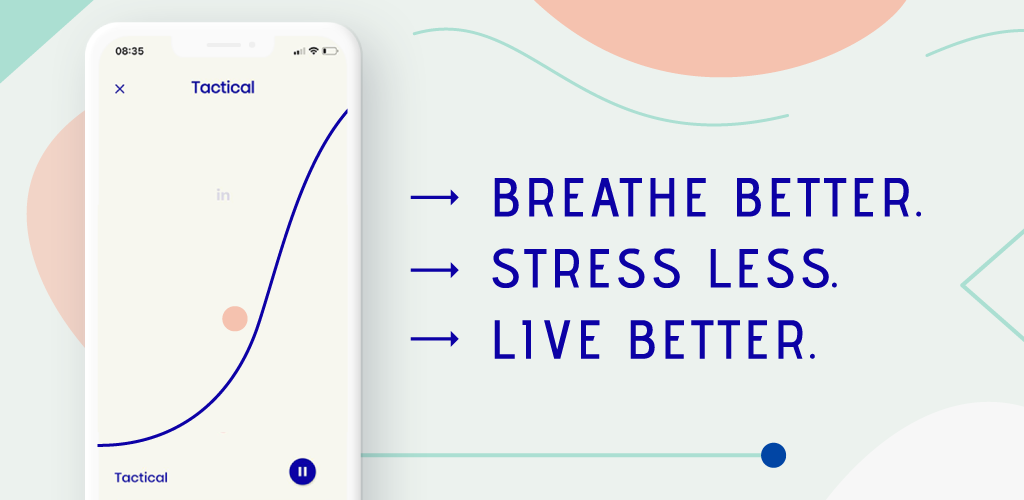
One Deep Breath
A tidy breathing pacer with a usable free tier. Slow breathing has real research behind it; this app has none of its own, and most people won't need Plus.
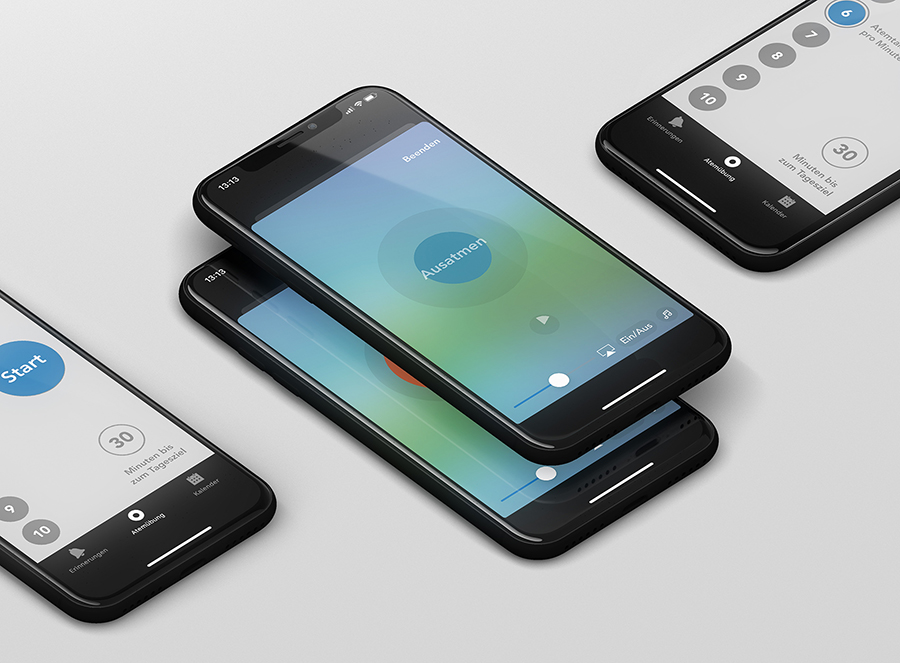
Vagusvit
A German breathing pacer: $7.99 once, no subscription, no data collected. The rhythm has good research; the app has none of its own and hasn't been updated since 2022.