The Fields (Electromagnetic)
Wearables that use weak electromagnetic signals you can't feel, like amofit S and Hapbee. What they claim, what the evidence shows (very little), and who might still try one.
Wearables that use weak electromagnetic signals you can't feel, like amofit S and Hapbee. What they claim, what the evidence shows (very little), and who might still try one.
By the end of the day, you've had enough input. Gel on your neck, a buzz on your wrist or one more app to open feels like one thing too many.
That's the pitch here: put it on and get on with your evening. No tingle, no hum, no routine. It's easy to see why that's tempting, and why these devices sell well to people who are already overloaded.
Both brands make claims you can't check by feel, so it's worth reading them carefully.
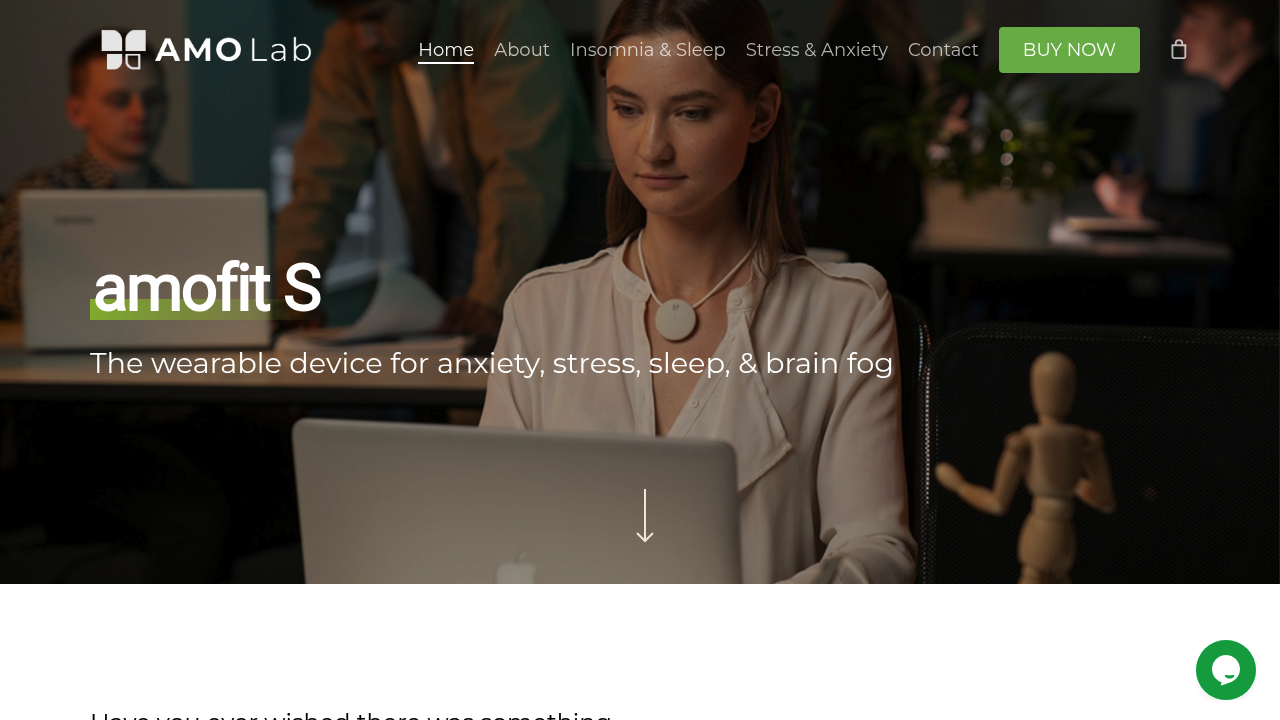
amofit S calls its technology cervicothoracic vagus electromagnetic stimulation. AMO Lab says a pendant worn near your chest sends a signal to the vagus nerve branches around the heart, nudging you toward rest and digest. Our amofit S review has the details.
Hapbee says it uses "ultra-low radio frequency energy." The company records what it describes as the magnetic signatures of molecules such as melatonin or caffeine. It then plays them back through the device so that, it says, your body responds as if the substance were there.
That second idea is an extraordinary claim. If it held up, it would upend a lot of what's known about how molecules act in the body. Extraordinary claims need strong evidence, and we couldn't find any published independent trials behind it.
Some magnetic treatments do have real evidence. Transcranial magnetic stimulation (TMS), for example, is FDA-cleared for depression. But TMS uses powerful pulses from a clinic machine aimed at the brain. The wearables in this category work on a different idea, at far lower power, and none is FDA-cleared. If you want a device that acts on the vagus nerve more directly, the Zappers is where the research is.
Here's the part that bothers me most. Because you can't feel these devices, they're the easiest in the whole directory to test properly. A fake version would feel exactly like the real one, so a sham-controlled trial is straightforward to run. That there still isn't an independent one says something.
For more on reading claims like these, see the Science.
Reviews split the way you'd expect for something you can't feel. Some people report calmer evenings or better sleep. Others notice nothing after weeks. A common worry is simply not knowing whether it's working. Sleep changes from night to night with stress, caffeine and hot flashes, so that's a hard question to answer from the inside.
Try this tonight. Lie down, then breathe in through your nose for a count of four and out slowly for a count of six. Keep going for five minutes. That's about six breaths a minute, and it has more research behind it than everything in this category combined. It's free, and you'll feel it working. For more options, see the Analogs.
This is the weakest-evidence corner of the directory, and we'd rather tell you that up front. If gel and buzzing are firm no's for you and you want to experiment, buy direct from the maker, check the return window before you pay, and set a reminder to decide before it closes. If you'd like something gentle with a little more behind it, the Haptics is a good next stop.