The short version
- What it is: two small buzzers, one for each side of your body, that vibrate in turn: left, right, left. Wear them, clip them on or hold them; the basic models need no app.
- Price: $219.99 to $229.99 for TouchPoints for Calm or Sleep, or $279.99 for the app-connected Thodian (as of October 2026). 30-day money-back guarantee.
- Best for: spike moments, like a hard phone call or a tense meeting, if you'd rather not add another app or subscription.
- Skip it if: you want a sleep fix, you have a pacemaker and haven't asked your doctor, or "74% less stress in 30 seconds" is why you're buying.
- The honest take: the left-right idea comes from EMDR trauma therapy, where even that part is debated. The headline numbers are customers rating themselves, and the one placebo-controlled trial was company-funded. Try the free version first.
On hold, again
It's 12:40, your lunch break is disappearing, and you've been on hold with the insurance company for eleven minutes about a claim they've denied twice. Your jaw is set and your shoulders are up by your ears. When someone finally picks up, you'll need to sound calm and reasonable. You're neither.
That's the moment TouchPoints is built for: two little buzzers you switch on when stress spikes, promising relief "in as little as 30 seconds." Big promise for something that needs a charging cable.
What it is and how it works
TouchPoints come from The TouchPoint Solution, an Arizona company selling them since December 2016. CEO Vicki Mayo co-founded it after her daughter struggled with night terrors, and neuropsychologist Dr. Amy Serin invented the technology. Serin runs her own clinic, the Serin Center, and the current About page names only Mayo.
You wear one pod on each side, on wristbands, clipped to a waistband or in your hands; they only work as a pair. They vibrate alternately (a buzz, not a current), a pattern the company calls BLAST (bilateral alternating stimulation tactile), at three speeds: slow for sleep, medium for calm and focus, fast for anger.
Suggested sessions run 5 to 30 minutes, and the Sleep model switches itself off after 30. Thodian adds an iPhone app with guided modes and optional Apple Watch prompts based on heart rate variability.
The company says the buzz interrupts fight-or-flight, and its FAQ claims it creates "new neural pathways." No study we found measured that.
Is this a vagus nerve tool?
Not directly. TouchPoints buzz the skin on your wrists, and the pitch is about the brain's threat response. If they help you settle, your vagus nerve is part of how your heart slows (the Science explains how), but that's true of a warm bath too.
What the evidence actually says
Where the idea comes from. In EMDR, you recall a distressing memory while following side-to-side eye movements, taps or tones. The World Health Organization recommends EMDR for PTSD, but whether the left-right part adds anything is debated. A 2001 meta-analysis of 34 studies found no added benefit from eye movements; a 2013 one found a moderate extra effect. The leading theory is that it taxes working memory so the memory feels less vivid, which is therapy work, not buzzing your wrists on hold. Still, a small independent 2025 German study of 40 people found tactile left-right stimulation lowered body arousal during recall. The concept isn't silly.
The 74%. The "74% less stress" claim traces to a 2017 company write-up about 140 customers who rated their stress from 0 to 10 in its app, then again 30 seconds after switching on. Average stress fell from 7.5 to 1.9. No comparison group, self-selected, self-rated. Serin is quoted saying results like these don't come from placebo. Thirty seconds of anything you expect to work can do a lot.
The one controlled trial. In 2019, São Paulo researchers gave 80 healthy men aged 18 to 35 real TouchPoints or identical dummies that didn't vibrate, then ran a lab stress test (a speech and mental arithmetic). The real-device group rated their stress lower afterward (3.8 versus 6.3 out of 10) and had lower cortisol. A genuinely better design. But TouchPoints funded it, Serin co-wrote it, there were no women, and it lists no trial registration. Its journal's publisher is on a widely used list of possibly predatory publishers, and it isn't in PubMed. TouchPoints' site calls it a trial "with athletes." The paper never mentions athletes.
Independent research. We found one study. In 2021, Virginia Commonwealth University researchers had eight young children with sensory over-responsivity wear TouchPoints before bed. They fell asleep faster, but total sleep and night waking didn't change. The Sleep page cites case studies for "an 80% reduction in wakefulness." We couldn't find the data.
Kids, ADHD and autism. The ADHD "case study" is one 14-year-old, told mostly through his mother's quotes, and the FAQ says autistic people may not notice a change. We found no trials in ADHD, autism, midlife women or adult insomnia. TouchPoints calls this a general wellness device, and we found no FDA clearance.
What owners commonly report
Not much, for a company claiming over a million TouchPoints sold. As of October 2026 there are no Trustpilot reviews, the Thodian app has too few App Store ratings to show a score, and the older app has one. Amazon blocked us.
Reviews on the older app's page mention calmer moments, including for a child, plus Bluetooth dropouts, one owner on a third replacement in four months, and customer service saying devices last one to two years. Blogger Michael Kummer, who got free units and uses affiliate links, felt better within minutes on stressful workdays, allowed it might be placebo, and found the bands fiddly one-handed and awkward beside a smartwatch.
Price, returns and privacy (as of October 2026)
- Calm: $219.99 with clips, $229.99 with wristbands. No app.
- Sleep: $229.99, with sweatbands and auto-off.
- Thodian: $279.99. Free app tier; premium is $79.99 a year, or $7.99 to $9.99 a month (the App Store and TouchPoints disagree).
- Returns: postmarked within 30 days of delivery, with a return number, like-new in original packaging. Return postage comes out of your refund, shipping isn't refunded, and refunds can take four weeks.
- Warranty: one year, defects only.
- HSA/FSA: through Truemed, which may issue a letter of medical necessity after an online questionnaire. The IRS warned in 2024 that such letters don't automatically qualify, so ask your plan.
- Privacy: Calm and Sleep don't connect to your phone. Thodian can read heart rate, HRV and sleep data from Apple Health or Google if you allow it. TouchPoints says it doesn't sell personal information but may share it with advertising partners. Disputes go to binding arbitration.
How it compares
More in the vibration and sound category. Prices as of October 2026.
- Apollo Neuro: $448 with a year's membership, then $99 a year; 30-day returns. Slow rhythms worn for hours, with more (still small) published research.
- Sensate: $299, 90-day guarantee. A humming pebble on your chest while you lie down. A ritual, not a rescue.
- Lief: $399, no returns. A chest patch that buzzes you into slow breathing, a method with better evidence than any vibration device.
- The butterfly hug: free. Same left-right idea, your own hands.
Who should skip it or go gently
- Pacemaker, defibrillator or other implant. TouchPoints' pages don't mention them. Ask your cardiologist.
- Pregnancy. Not addressed either. Ask your OB or midwife.
- A racing heart that's new or comes with chest pain or dizziness. It could be perimenopause, your thyroid or your heart rhythm. Get checked first.
- Trauma therapy or dissociation. Bilateral stimulation is a therapy tool, and the FAQ says people with dissociative disorders may not notice a change. Ask your therapist whether, and how, to use it.
- Buying for a child. The app is for 13 and up, and the only child study had eight kids. Ask their pediatrician or occupational therapist.
Try this free tonight
Try the butterfly hug, developed by EMDR therapists in Mexico in the late 1990s. Sit up, lower your eyes and breathe slowly. Cross your arms so each middle finger rests just below the opposite collarbone. Tap slowly, left, right, left, for eight rounds, then stop and notice how you feel. Repeat if it's helping.
That's the core of TouchPoints, by hand. If it does nothing for you, I'd think hard before paying $220 for a machine to do it. More free options are in the Analogs.
FAQ
Do TouchPoints work?
Possibly, for a stressful moment. One company-funded trial in 80 young men beat dummy devices on stress and cortisol. The "74% in 30 seconds" is customers rating themselves.
Are TouchPoints worth it?
If the butterfly hug helps and you want hands-free, $219.99 (as of October 2026) with a 30-day guarantee is a fair experiment. Budget for return postage, and don't buy it for sleep.
TouchPoints vs Apollo: which is better?
Neither has strong evidence. TouchPoints is cheaper, subscription-free and suits short bursts. Apollo is for hours of wear, costs twice as much plus a yearly fee, and has more studies.
The bottom line
TouchPoints is simple, low-risk and refreshingly app-free, with roots in real, if contested, trauma research. But the headline numbers are customers grading themselves, the best trial was company-funded, and the independent evidence is eight children who fell asleep faster. If you buy it, test it on your worst moments and put the return date in your calendar.
Or cross your arms, tap left and right, and see what your own hands can do first.
Similar listings in category
Explore More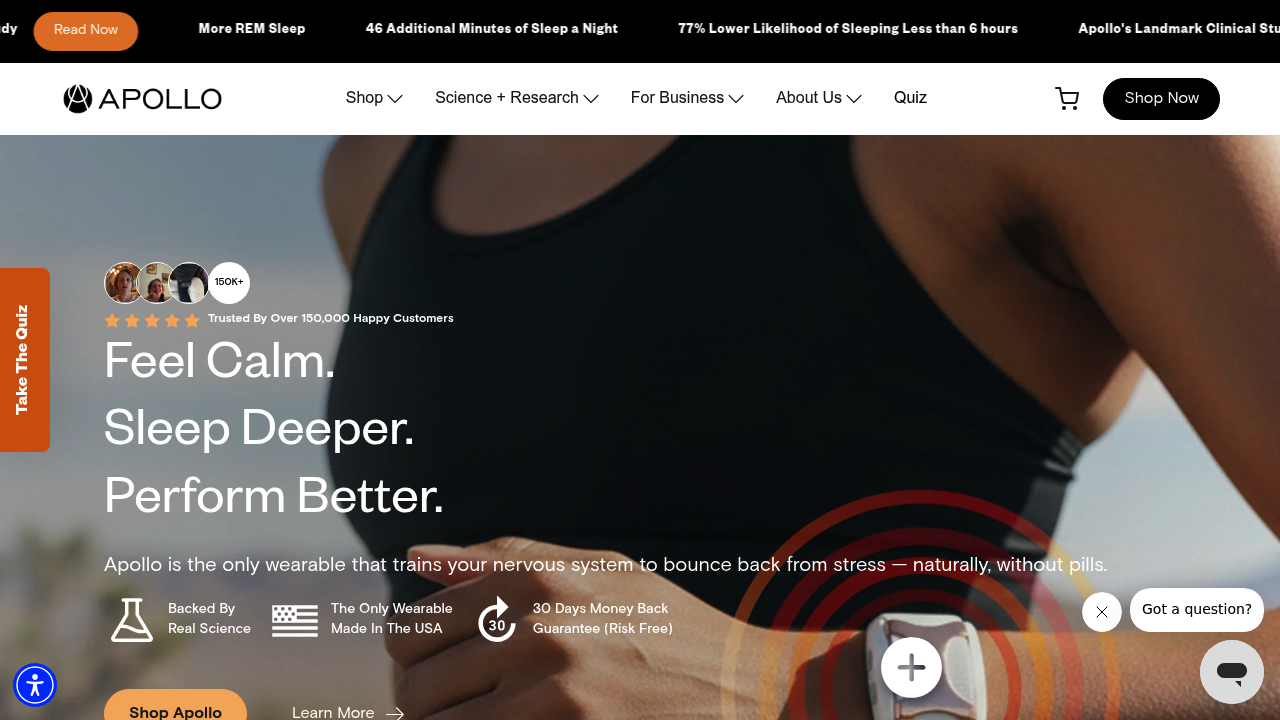
Apollo Neuro
A vibrating band or clip that aims to calm your nervous system through touch. Gentle and low-risk, but pricey, tied to a subscription, and backed by small studies.

Sensate
A humming pebble you rest on your chest while soundscapes play in your headphones. Gentle and easy to like, but the research is small and mostly the company's own.

Vagus Vibe
An iPhone app that buzzes slow, calming rhythms through your phone. A cheap way to test vibration; the "heal" and "vagal massage" claims have nothing behind them.