
VaguVibe
A pendant that pulses a weak magnetic field over your chest. Its one study is 33 people sitting for an hour with no comparison group, and sitting still can do that too.
A pendant that pulses a weak magnetic field over your chest. Its one study is 33 people sitting for an hour with no comparison group, and sitting still can do that too.
It's half past eight and you're folding towels on the bed, about as calm as a Tuesday gets. Your heart hasn't noticed. It's going like you've run for a bus.
Later, scrolling, you land on a sleek pendant's website: wear it and it lowers cortisol, raises your HRV and eases anxiety, depression, even migraines. $249, down from $349. No gel, no buzzing, nothing to do. It's the "nothing to do" that gets you.
VaguVibe comes from Resona Health, which also sells a pocket PEMF gadget called the VIBE. The BBB lists the business as Sly As A Fox LLC of Cocoa Beach, Florida, with Mark L. Fox as CEO; Resona calls its designer a former Space Shuttle chief engineer, which we couldn't confirm. vaguvibe.com lists no address, but its return policy names Resona. We found no sign it's a relabeled generic.
The brand's own pages can't agree on the basics: field strength is listed as 6, 9 or 12 gauss.
That's the claim, not the evidence. In your chest, the vagus nerves run deep: behind the main airways and the big vessels at the top of the heart, then along your gullet. Resona's own FAQ says its field "drops off very quickly" with distance, and we found no measurement showing a pendant reaches the nerve. Ear and neck stimulators at least aim where a branch runs near the skin.
If it calms you, my money is on the sitting still.
The one VaguVibe study. Resona hosts a 2025 report prepared by a Florida consultancy, Scientifica Consulting. Thirty-three healthy adults aged 30 to 52, 16 of them women, sat with the device for an hour. Afterwards, heart rate was about 4% lower, two heart rate variability measures were up 16% and 32%, and self-rated anxiety and stress were down about a fifth.
Then read the design. No comparison group, no sham, no randomization: everyone was simply measured before and after. The report states no funding source or ethics approval, and we couldn't find it in any journal. And it tested an hour, though the website says 30 minutes is enough.
Why that matters. In a 2010 double-blind study, 58 volunteers spent an hour in a magnetic field stronger than VaguVibe's stated peak on one day, and a sham on another. Heart rate fell and heart rate variability rose across the hour in both sessions; the field made no difference. Different signal, same lesson: quiet sitting moves these numbers by itself, which is why the Science says to watch your trend, not one reading.
Everything else. Under a "40+ Published Studies" banner, Resona's papers page lists 30 items of general PEMF and microcurrent research, much of it on bone cells and rats. None tests a Resona device or the vagus nerve. PEMF isn't nonsense across the board: back in 1979, the FDA approved a PEMF system for fractures that won't heal. That means coils over the break for hours a day for months, not a pendant for stress.
Nothing tests VaguVibe in midlife women, over weeks, or against a fake pendant, which for a device nobody can feel would be easy.
As of October 2026, both VaguVibe product pages show zero reviews. Resona Health has 4.6 stars from 603 Trustpilot reviews, but that covers all its products, mostly the VIBE, and the company invites reviews. Only four mention the VaguVibe, all five stars; one owner slept well the first night after years of broken sleep.
Less happy reviews across the range mention no change after a month and battery problems that support fixed. The BBB rates the business A+. We found no Amazon listing and no independent reviews.
"15,000+ Happy Customers"? Unverifiable, and other pages selling it say 1,000+ and 10,000+.
Prices as of October 2026.
More feel-nothing devices are in the Fields.
Sit with a hand on your breastbone, right where the pendant would hang. Breathe in through your nose for about four seconds and out for about six, for ten minutes. A 2022 review of 223 studies found slow breathing raises vagus-linked heart rate variability, the very number VaguVibe's study measured.
If you track HRV, compare a week of evenings with the breathing to a week without: the comparison the study skipped. More free options are in the Analogs.
Unknown. Its one study had no comparison group, and sitting still for an hour can raise heart rate variability by itself. Nobody has tested it against a fake pendant.
No. Resona calls it a general wellness device, which isn't a clearance or an approval.
No. VaguVibe is Resona Health's pendant. "Vagus Vibe: Heal by vibrations" is a separate phone app from another company, Lazy Loop AB.
It's a real Florida company with an A+ BBB rating and a 30-day guarantee. What's missing is evidence it does what the homepage says.
VaguVibe is a real product with a 30-day guarantee. What it lacks is evidence: one in-house hour with no comparison group, a homepage that runs well past even that, and a nerve that sits deep in your chest. If gel and buzzing are firm no's and $249 won't sting, I'd try it as a 30-day experiment with a sleep diary. Otherwise, I'd skip it.
Ten minutes of slow breathing does what that study measured. It's free tonight.
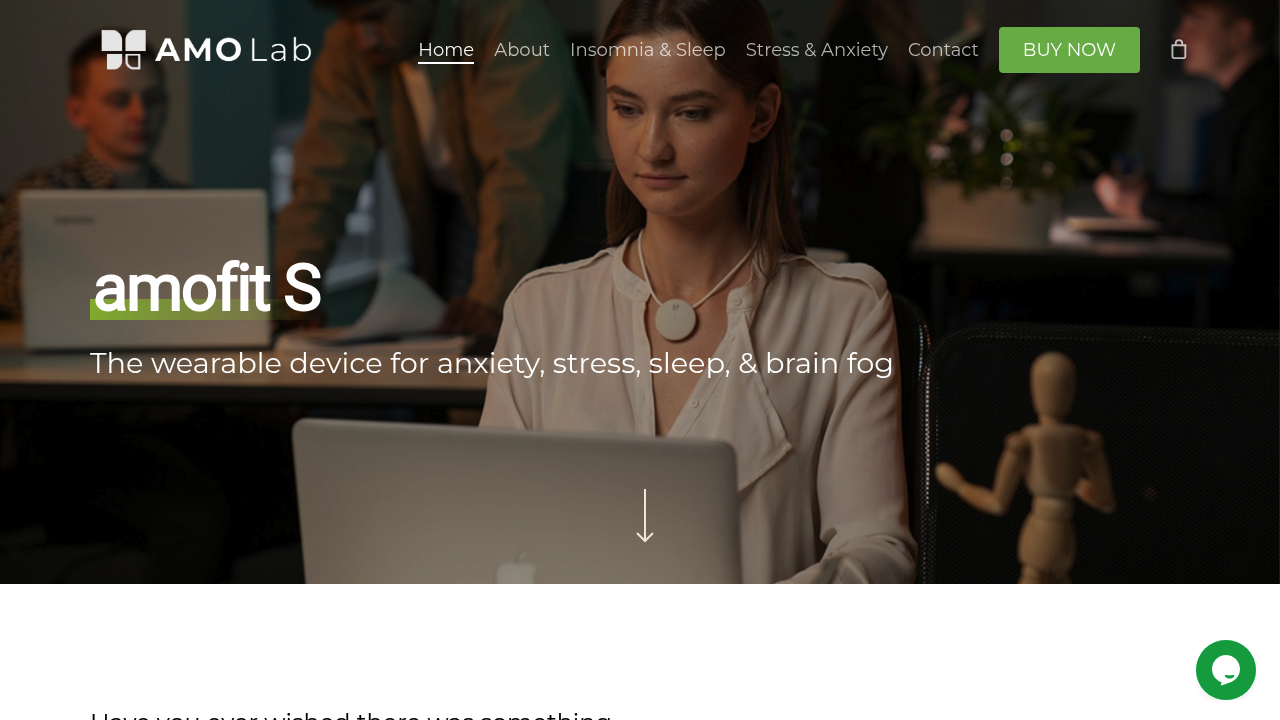
A tiny necklace that AMO Lab says calms your nervous system with a signal you can't feel. The research is small and company-backed, so treat the 30-day return as your safety net.

A neckband and pillow pad said to replay the magnetic "signatures" of caffeine or melatonin. No independent evidence, a paid app, and a company in trouble.