
The short version
- Insurance: no, not for the devices you see in ads. Insurers pay for surgically implanted vagus nerve stimulators, mainly for hard-to-treat epilepsy. Major insurers class the wearable kind as unproven or experimental.
- HSA or FSA: sometimes. 13 of the 26 devices we review offer a route through a letter of medical necessity, usually from a service called Truemed. Whether it holds up depends on your health, your plan and your paperwork.
- The catch: the IRS doesn't approve products, and "stress relief" is the kind of spending its rules leave out. You need a specific medical condition the device is meant to treat.
- The timing trap: Truemed says its health survey has to be completed the same day you buy. Letters can't be backdated.
- Who carries the risk: you. If an HSA purchase doesn't qualify, it's taxed as income, plus 20% if you're under 65.
- The honest take: worth doing if you have a diagnosis and a clinician who'd back you up. It isn't a reason to buy a device you weren't going to buy anyway.
The button above "Place order"
It's 10:40pm, your card number is in, and one more button has appeared above "Place order." It says you could pay with your HSA or FSA and save around 30%. There's $600 left in your FSA, and it vanishes on December 31. It feels like finding a twenty in a coat pocket.
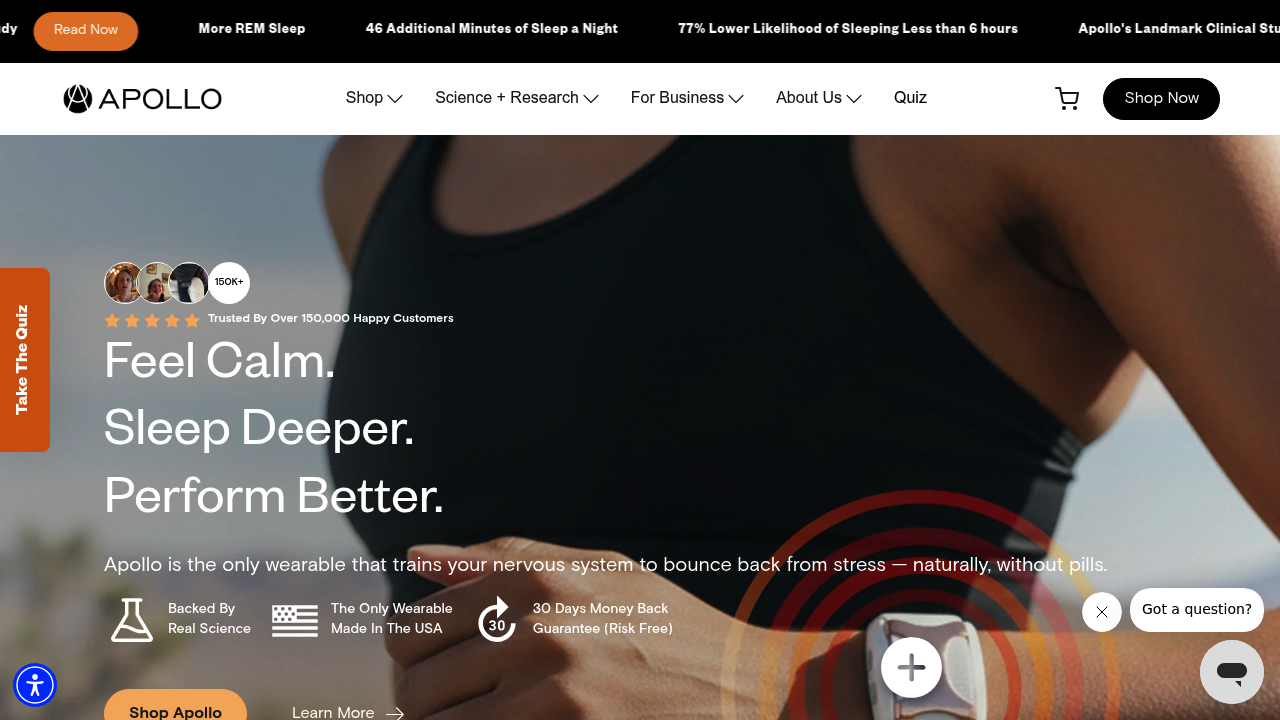
We got the after-the-fact version. When we ordered an Apollo Neuro in November 2026, the confirmation email said the order "might be eligible for HSA/FSA reimbursement," with a link to Truemed.
So is that real money, or a tax problem in a friendly font? Mostly real, with fine print. And insurance turns out to be a separate question with a much shorter answer.
Three pots of money, three different answers
People say "my health plan" for all three of these, but they follow different rules:
- Health insurance pays for treatment it considers medically necessary and proven. Someone else decides.
- An HSA or FSA is your own pre-tax money. The IRS defines what it can be spent on, and nobody approves products in advance.
- Employer perks, such as a lifestyle spending account or wellness stipend. Your employer decides what counts, and the money is generally taxed as income.
Does health insurance cover vagus nerve stimulation?
For the implanted kind, yes, within limits. For anything you can order online, no.
Implanted stimulators. These are surgically placed devices, and they're where the coverage is. Medicare covers them for "medically refractory partial onset seizures" when surgery isn't an option or has failed. The four commercial policies we read (UnitedHealthcare, Cigna, Aetna and Blue Cross NC, all 2026 versions) cover hard-to-treat epilepsy and nothing else. For treatment-resistant depression, Medicare has paid only inside an approved clinical trial since 2019. The manufacturer began asking Medicare to reconsider in June 2025, and as of November 2026 Medicare hasn't opened a review.
gammaCore. It's the only device in our directory that the FDA has cleared as a vagus nerve stimulator, by prescription, for migraine and cluster headache. Even so, UnitedHealthcare, Aetna and Blue Cross NC class non-invasive stimulation as unproven, experimental or investigational, and Medicare has no national policy on it. In practice the VA pays: it made up about 71% of the maker's 2025 revenue. There's no published price; you get a quote after a prescription. Our gammaCore review has the detail.
Consumer devices. We found no US insurer that covers Pulsetto, Truvaga, Apollo Neuro or similar wellness devices, and none of the brand pages we checked claims otherwise. Truvaga's own FAQ says its devices are "not covered by health insurance." The insurer policies above are written broadly enough to rule out ear-clip stimulators too.
Two neighbors. Alpha-Stim, the prescription earlobe-clip device cleared for anxiety and insomnia, is experimental in Aetna's book, and its maker doesn't bill private insurers. Medicare does cover TENS units for some chronic and post-surgical pain, though not for chronic low back pain, and certainly not for the DIY ear-clip use we cover in our TENS 7000 review.
Can you use an HSA or FSA instead?
Everything hangs on one rule. The tax code lets HSA and FSA money pay for "the diagnosis, cure, mitigation, treatment, or prevention of disease." IRS Publication 502 leaves out anything "merely beneficial to general health," and it says no to spending meant to "relieve physical or mental discomfort not related to a particular medical condition."
That last phrase describes most of what a calming gadget does for most people.
So how do companies advertise HSA/FSA? With a letter of medical necessity. It isn't an IRS form. It's a convention: a clinician states that you have a specific condition and recommends a specific treatment for it. Services such as Truemed, Flex and Sika produce these at or just after checkout. You fill in a health survey, a licensed clinician reviews it remotely, and if they agree, you get a letter.
What the IRS has said. Two things worth knowing:
- March 2024: an alert warned that "notes from doctors based merely on self-reported health information" don't turn food, wellness and exercise costs into medical expenses. It named no company, and it didn't ban letters or telehealth.
- September 2026: a new IRS answer on wearable health trackers. A device counts if you buy and use it mainly to diagnose, treat or prevent a specific disease. Wanting to monitor or improve your health in general isn't enough. A practitioner's recommendation and your own diagnosis count in your favor. That answer is about trackers such as rings and watches, not stimulators, but I'd expect the same logic.
One more, because some blogs get it wrong: the July 2025 tax law changed several HSA rules, and none of them made wellness or fitness spending eligible.
An HSA and an FSA aren't the same risk.
- FSA: your plan administrator decides, claim by claim, and your employer can narrow what the plan accepts. If they say no, you find out quickly and pay with ordinary money.
- HSA: nobody checks at the time. The bank isn't required to, so a card that goes through isn't approval. If the IRS later disagrees, the amount is taxed as income, plus an additional 20% if you're under 65. Keep the letter and the receipt with your tax records.
Is Truemed legit?
It's a real company running a real process. Whether its letter protects you is a different question.
What it does. You answer a health survey, and an independent licensed practitioner reviews it. There's no in-person visit. The clinicians belong to contracted medical groups that Truemed says it doesn't own, employ or supervise. A letter typically lasts 12 months and covers one merchant, and through partner merchants Truemed says there's usually no extra cost to you.
What it doesn't do:
- Guarantee anything. Its terms, updated in September 2026, say your plan administrator, your employer or the IRS may not accept the letter. If an administrator rejects one, Truemed says it typically offers 30% of the purchase price, at its own discretion.
- Approve wellness goals. Truemed's own eligibility page says goals like sleeping better "without a specific underlying condition" don't meet the IRS threshold.
- Work backward. Its help pages say the survey has to be completed the same day as your purchase, and that it can't write a letter for something you've already bought elsewhere. That link in the confirmation email is a same-day offer, not an open invitation.
The model, a survey reviewed remotely, sits close to what the IRS alert described. A former IRS commissioner argued in June 2026 that the agency should say plainly that telehealth letters count. As of November 2026 it hasn't said either way. So I'd treat the letter as evidence, not a permission slip.
Which devices offer an HSA/FSA route
This is what each company offers, from our reviews as of October 2026. "Offers a route" means there's an advertised way to try. It doesn't mean the IRS or your plan agrees.
| Device | List price | HSA/FSA route the company offers |
|---|---|---|
| Pulsetto | $242 | Truemed letter |
| Truvaga | $325 | Truemed letter |
| Hoolest VeRelief Prime | $199 | Truemed letter |
| Xen by Neuvana | $449 | Truemed letter |
| Nuropod | $900 | Truemed letter |
| Vagustim | $369 | Truemed letter |
| Apollo Neuro | $448 | Truemed letter |
| Sensate | $299 | Truemed letter |
| TouchPoints | $219.99 | Truemed letter |
| Muse | $249.99 | Truemed letter |
| HeartMath Inner Balance | $249 | Truemed letter |
| Hatch Restore | $169.99 | Truemed letter |
| Moonbird | $179.99 | Letter of medical necessity (form after purchase) |
| CalmiGo | $349 | Maker says eligible; paying through Flex may need a short consult |
| Lief | $399 | Maker says FSA-eligible; check HSA with your plan |
| TENS 7000 | $52.99 | Over-the-counter pain device; often on eligibility lists |
| Alpha-Stim | $882 | Prescription device; maker accepts HSA/FSA |
| gammaCore | Quote only | Prescription device; maker says HSA/FSA may apply |
| Hapbee | $349 | Store says "Pay with HSA/FSA" but doesn't explain how |
| SONA | $941 | No option found |
| ZenoWell | $239 | Not advertised |
| VaguVibe | $249 | Not offered |
| BrainTap | $797 | No mention found |
| Dolphin Neurostim | $424 | No program found |
| amofit S | $248 | Not advertised |
| Nurosym | €700 | Not sold in the US |
That's 12 using Truemed, one that sends a letter form after purchase, five that say they're eligible another way, one that doesn't explain, and seven with nothing.
How to give yourself the best case
- Ask your plan first. There's a three-question script below.
- Start from a diagnosis. Insomnia, generalized anxiety and migraine are diagnoses. "Stressed and not sleeping" isn't one yet. If the symptoms are new, that's a doctor's visit anyway, with HRT part of the conversation.
- Get your own clinician's letter if you can. I'd rather hold a letter from the doctor or nurse practitioner who treats me than one from a survey, because it rests on more than what I typed into a form.
- Do the paperwork the day you buy. Not the weekend after.
- Keep everything. The letter, the receipt, and a note of the condition it's for.
- Remember the subscription. App memberships and accessories face the same test as the device.
What the saving is really worth
Paying pre-tax saves you the tax you'd have paid on that income. On a $448 Apollo Neuro, someone in the 22% federal bracket saves about $99 in federal income tax, and more once payroll and state taxes are counted. That's where "save around 30%" comes from.
It cuts both ways. If the same $448 came out of an HSA and didn't qualify, that person would owe the $99 in income tax plus about $90 more. A hundred dollars off isn't worth a letter you don't believe.
If your FSA is about to expire: the 2026 health FSA limit is $3,400. Your plan may let you carry over up to $680, or give you a grace period of up to two and a half months. It can't do both, and it doesn't have to offer either. For 2027 the figures are $3,500 and $700. Check before you panic-buy.
Other ways to pay less
- Veterans. The VA provides gammaCore and can order Alpha-Stim, and CalmiGo says VA-enrolled veterans can get it free with a clinician's order. Start with your VA provider.
- Lifestyle spending accounts and wellness stipends. These are generally taxable, and your employer decides what they cover, so a wellness device may simply be on the list. Truvaga's maker says it's sold through some employee benefit plans.
- Medicare Advantage allowances. At least one 2026 over-the-counter catalog, Aetna's, includes basic TENS units. None of the four we checked lists a vagus nerve device.
- The return window. The median across the devices we review is 30 days. Our statistics page has every price and policy side by side.
- The free version. Slow breathing, humming and cold water cost nothing. They're in the Analogs.
Try this free tomorrow
Make one five-minute phone call. Ring the number on the back of your HSA or FSA card and ask:
- "Do you accept a letter of medical necessity from a telehealth service such as Truemed, or does it need to come from my own doctor?"
- "What exactly do I submit, and does the letter have to be dated on or before the purchase?"
- "If I return the device, how do I put the money back?"
Write down the date and the name of whoever answered. It's the cheapest research you'll do all year.
FAQ
Is Pulsetto HSA or FSA eligible?
Not automatically. As of October 2026, Pulsetto offers a route through Truemed. A clinician still has to agree you have a condition it would treat, and your plan can still say no.
Is Apollo Neuro FSA eligible?
Same answer. Apollo works with Truemed, at checkout or through a link in the order confirmation email, and Truemed says the survey must be done the same day you buy.
Does Medicare cover vagus nerve stimulation?
Medicare covers implanted stimulators for seizures that medication hasn't controlled, and for depression only inside an approved trial. It has no national policy on non-invasive devices, and we found no Medicare coverage for consumer wellness devices.
Is gammaCore covered by insurance, and what does it cost?
Usually not by commercial insurers, which class it as unproven. The VA provides it to veterans. The maker publishes no price and quotes you after a prescription.
How much does a vagus nerve stimulator cost?
Consumer electrical stimulators in our directory have a median list price of $369, ranging from $52.99 to $941 as of October 2026. Implanted devices are surgery, billed through insurance.
Is a TENS unit FSA eligible?
Usually. TENS units are sold for pain relief, which is a medical purpose, and Cigna's eligible-expense guide lists them. The IRS publishes no product list, so check your own plan.
The bottom line
Insurance won't pay for a consumer vagus nerve device, and I wouldn't expect that to change soon. Your HSA or FSA might, if you have a real diagnosis, a clinician who recommends the device for it, and the letter and receipt to show for it. Without those, the 30% is a discount on a risk.
Decide whether you want the device first. Then make the phone call. The twenty in the coat pocket will keep until morning.
This article is general information, not tax, legal or medical advice. HSA and FSA rules depend on your plan and your circumstances, so check with your plan administrator or a tax professional. Figures are as of November 2026.
Some links on this site may earn us a commission. That never changes what we report.
Sources
- Internal Revenue Code section 213(d), definition of medical care: Cornell LII
- IRS Publication 502, Medical and Dental Expenses (2025): irs.gov
- IRS Publication 969, Health Savings Accounts and Other Tax-Favored Health Plans (2025): irs.gov
- IRS news release IR-2024-65, March 6, 2024: irs.gov
- IRS, frequently asked questions about medical expenses related to nutrition, wellness and general health (updated September 23, 2026): irs.gov
- IRS Notice 2004-2, HSA questions and answers: irs.gov
- IRS guidance on HSA changes in the July 2025 law, December 9, 2025: irs.gov
- IRS inflation adjustments for 2026 and 2027 (health FSA limits): 2026, 2027
- HealthCare.gov, using a flexible spending account: healthcare.gov
- Truemed: FAQ, terms, disclosures, letter requests, eligibility overview
- Werfel D., opinion column on HSA rules and telehealth letters, Bloomberg Tax, June 24, 2026: bloombergtax.com
- Medicare National Coverage Determination 160.18, Vagus Nerve Stimulation: cms.gov
- LivaNova, request for Medicare reconsideration, June 4, 2025: BioSpace
- UnitedHealthcare medical policy on vagus nerve stimulation (effective January 1, 2026): uhcprovider.com
- Cigna coverage policy 0350, Vagus Nerve Stimulation (effective February 15, 2026): cigna.com
- Aetna Clinical Policy Bulletins 0191, Vagus Nerve Stimulation and 0469, cranial electrical stimulation
- Blue Cross NC medical policy, Vagus Nerve Stimulation (reviewed May 2026): bcbsnc.com
- electroCore annual report for 2025 (Form 10-K, filed March 19, 2026): sec.gov
- gammaCore: how to get it, veterans FAQ
- Alpha-Stim FAQ: alpha-stim.com
- Medicare coverage of TENS: LCD L33802, NCD 160.27
- Cigna, eligible health care expenses: cigna.com
- IRS Publication 15-B, Employer's Tax Guide to Fringe Benefits (2026): irs.gov
- Aetna Medicare 2026 over-the-counter catalog: aetna.com