The short version
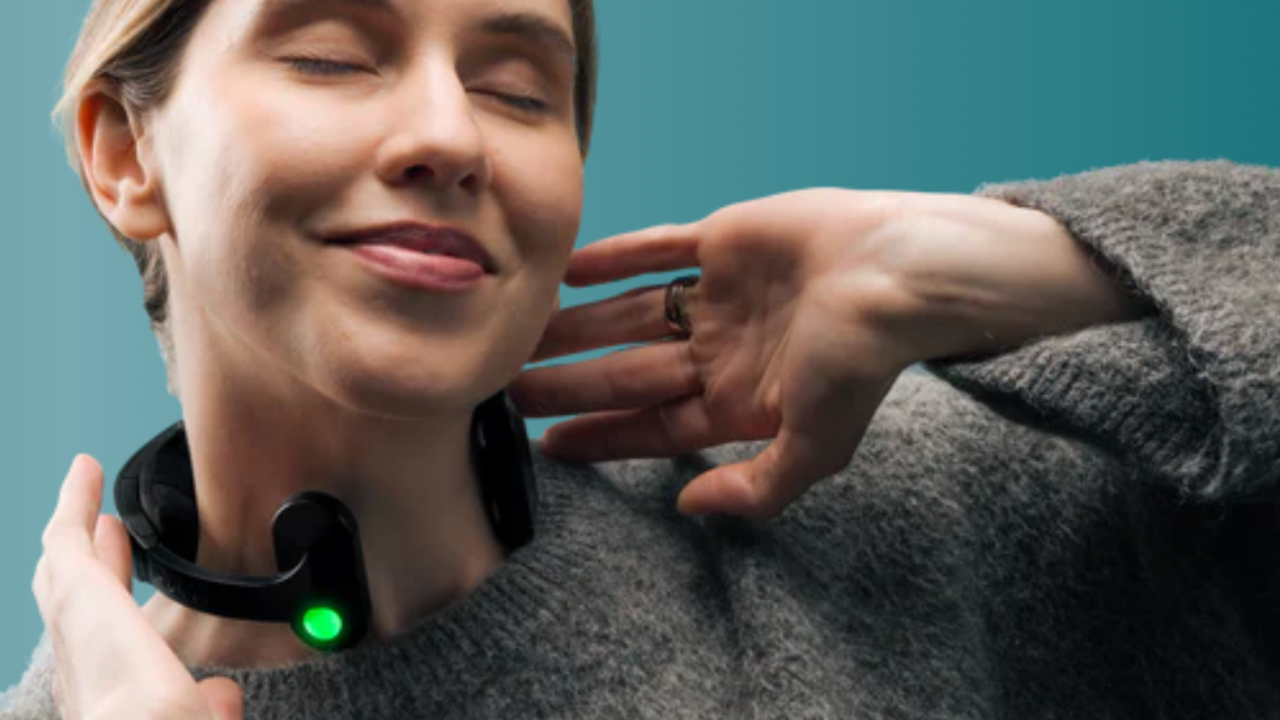
- What it is: a hands-free band that rests around the back of your neck and sends a mild current through gel on both sides, aimed at the vagus nerve. A phone app runs it.
- Price (as of October 2026): Lite $242, FIT $269, FIT X $314 on pre-order. 30-day money-back guarantee, 2-year warranty, HSA/FSA possible through Truemed.
- Best for: people who don't mind gel and will use it twice a day for a month.
- Skip it if: you have a pacemaker or other implanted electronic device, or metal implants in your neck. If you're pregnant, or have epilepsy or a heart rhythm or blood pressure problem, ask your doctor first.
- The honest take: easy to use, and plenty of owners like it. But the evidence is one small company-funded study with no placebo group, and the marketing has overreached before. Treat it as a 30-day experiment.
Four minutes in the parking lot
It's 7:52am. You're in the work parking lot with the engine off, and your heart is going like you've had three coffees, though you've had one. You have about four minutes before you walk in and become the calm one.
That's when the ad finds you: a woman with a band around her neck, eyes closed, and the words "only 4 minutes." Pulsetto is the most-searched device in this category. It also has the most to untangle.
What it is and how it works
Pulsetto is based in Vilnius, Lithuania. You spread conductive gel on both sides of your neck, rest the band around the back like open headphones so its two steel contact pads sit over the gel, and pick a program in the app. Then you raise the intensity until you clearly feel it. Pulsetto compares the sensation to a cat purring against your neck and says light muscle twitches and brief redness are normal. It should never sting.
Neck versus ear devices are covered in the Zappers. "Only 4 minutes" is the headline, but the manual says programs run 4 to 20 minutes, and the sleep program is 10.
- Lite ($242): the original, one size. Pulsetto calls it "best for most users."
- FIT ($269): adds magnetic padding that adjusts it to three neck sizes, a "wave-like" stimulation mode and a little more battery.
- FIT X ($314): the new flagship, which Pulsetto says adjusts intensity automatically, checks the pads are making contact and works offline. As of early October 2026 it's a pre-order: you're charged now, and it ships at launch. I'd wait until real owners have lived with it.
Pulsetto quotes a week to 12 days per charge, though its pages disagree on which model gets what. The box includes a month's gel, a USB-C cable and a guide.
What the evidence actually says
The homepage shows a "Clinically Proven" badge and says that in a 2025 study, stress dropped 56% and sleep improved 41% in four weeks. Here's what's behind that.
- The 40-person study. Healthy adults aged 21 to 64 (29 of the 37 who finished were women) used Pulsetto twice a day for four weeks, randomly assigned to stimulation on one side of the neck or both. There was no sham device and no untreated group. Self-rated depression, anxiety and sleep improved in both groups, and hair cortisol fell in the two-sided group. Pulsetto funded it with help from an EU grant and says an independent research center ran it. As of October 2026 we could find it only as a one-page conference abstract in European Psychiatry, whose first author is listed at Pulsetto.
- The fine print. In that abstract, the 56% drop is in depressive symptoms, not stress. Sessions were 8 minutes, not 4. And the cortisol figure changes from page to page on Pulsetto's site.
- Wearable sleep data. An industry-supported analysis of 36 US users' Oura, Garmin and Apple Watch data found about 35 to 40 minutes more sleep by week six. No comparison group, and the authors say it can't show cause.
- One outside lab study. A 2026 physiology paper from a US medical school gave nine young adults one session with a Pulsetto device. Blood pressure dipped and alpha brain waves rose, which ear stimulation didn't do. One session, no sham.
Why the missing sham matters: in a sham-controlled 2024 trial of ear stimulation for chronic insomnia (72 people, mostly women in their mid-40s), the fake-stimulation group's sleep scores improved about half as much as the real group's. Expectation does a lot. Pulsetto lists a sham-controlled insomnia trial of its own as planned or underway.
There's also some history. Wikipedia notes reviewers found Pulsetto using imagery from unrelated studies. Lithuania's public broadcaster LRT reported the fuller story in December 2025. In 2024, Pulsetto's site carried a stress study that a video blogger noticed was the same as a competitor's ear-stimulation study, with the ear in the diagrams swapped for a neck and a note saying it was done for Pulsetto. Pulsetto's founder and CEO acknowledged the company had bought the plagiarized study from a hired writer. It was online from April to August 2024, and Pulsetto says it removed it and ended that relationship. The newer studies are different, but read every Pulsetto number twice. For more on reading studies, see the Science.
What owners commonly report
As of October 2026, Pulsetto's Trustpilot TrustScore is 4.2 from about 3,460 reviews: 62% five-star, 16% one-star. Pulsetto actively invites reviews. The iPhone app averages 4.8 stars from about 7,300 ratings.
- The good: many people say they feel calmer, sleep better, or reach for it when anxiety flares. Some credit it with easing headaches or neck pain.
- The bad: the most common one-star complaint is billing: Premium subscriptions people didn't mean to start, and cancellations that took several tries. Next come unresponsive customer service, devices that failed within months, and refused refunds. A few describe neck soreness or other discomfort.
- The app: critical App Store reviews object to constant Premium upsells in an app you need to run a device you've already paid for.
The Better Business Bureau rates Pulsetto F. Independent testers split too: Wareable liked it but called the gel its biggest drawback, while Michael Kummer, the blogger who spotted the copied study, saw no change in his heart rate variability (he recommends competing devices through affiliate links).
Price, returns, subscriptions and HSA/FSA (as of October 2026)
- Device: Lite $242, FIT $269, FIT X $314 (pre-order), shown as discounts off $542 to $664; a $199 Lite deal sometimes appears. I'd treat the sale price as the real price.
- App: free, with five programs (stress, anxiety, sleep, burnout and pain) that Pulsetto says stay free for the life of the device. Premium adds a few programs, guided meditations, breathing exercises and wearable syncing: $17.99 a month or $99.99 a year in the App Store. A free trial comes with the device.
- Subscription fine print: Premium auto-renews. Cancel at least 48 hours before renewal, where you bought it: website subscriptions can't be cancelled through Apple or Google, and deleting the app cancels nothing. Subscription fees aren't refunded if you return the device.
- Gel: four tubes for $45, which Pulsetto says last four to six months.
- Returns: 30 days from delivery, in the original unaltered packaging with all accessories, so keep the box. You pay for the return label ($5 to $35), and shipping isn't refunded.
- Warranty: 24 months against defects.
- HSA/FSA: through Truemed, where an independent clinician reviews a health questionnaire and decides whether to issue a letter of medical necessity. It isn't automatic, so check with your plan too.
On delivery day, I'd set two reminders: one for the end of the Premium trial and one for day 25.
How it compares
Prices as of October 2026:
- Truvaga ($325 or $499): a handheld neck zapper, two minutes a session, from electroCore, whose prescription sibling gammaCore has sham-controlled headache trials. No app subscription.
- Xen by Neuvana ($359 on sale): earbuds that stimulate the left ear, about 15 minutes a day, HSA/FSA eligible. If anything near your throat makes you tense, start here.
- ZenoWell ($239 to $439): another ear device, 20-minute sessions, no advertised HSA/FSA.
- Apollo Neuro ($448 with a year of membership, then $99 a year): vibration on your wrist or ankle, no current at all. See the Haptics.
Pulsetto wins on price and hands-free use, and loses on gel and upsells.
Who should skip it or ask a doctor first
Pulsetto's manuals say not to use it with an implanted electronic device such as a pacemaker or hearing implant, metal implants in your neck area, or broken or irritated skin on your neck. Don't use it in or near water or while driving, and stop if you feel dizzy or lightheaded. Its terms tell anyone with a heart or other medical condition to check with a doctor first.
That list is shorter than some competitors'. Neither manual mentions pregnancy, epilepsy or heart rhythm problems, and I'd ask your doctor about any of those. The same goes for low blood pressure or fainting, since that small lab study saw blood pressure drop during stimulation. Pulsetto's materials don't address medications; if you take something for heart rate or blood pressure, ask.
And if the pounding heart is new, or arrived with perimenopause, get it checked before you put it down to stress. A device can sit alongside treatment, HRT included, but it can't replace a diagnosis.
Try this free tonight
Pulsetto's own site suggests pairing sessions with slow breathing: in for four seconds, out for six. Try it alone first, through your nose, for five minutes. That's six breaths a minute. A 2022 review of 223 studies found slow breathing raises the heart rate variability linked to your vagus nerve, during practice and after weeks of it. For more no-cost options, see the Analogs.
FAQ
Does Pulsetto actually work?
Many owners feel calmer and sleep better. What hasn't been shown is that it beats a convincing placebo. Its main study had no sham group, so some of the improvement could be expectation and a new routine.
Is Pulsetto FDA approved?
No. We found no FDA clearance, and its manual says it isn't a medical device. Its "CE" and "FCC" badges relate to electrical safety and radio standards, not to whether it helps stress or sleep.
Does Pulsetto need a subscription?
No. It works with five free programs. Premium ($17.99 a month or $99.99 a year in the App Store, as of October 2026) adds extras, auto-renews, and is behind most of the billing complaints.
Pulsetto vs Truvaga: which is better?
Neither has a sham-controlled trial for stress or sleep. Truvaga has the stronger research pedigree, two-minute sessions and no subscription. Pulsetto is cheaper and hands-free.
The bottom line
Pulsetto is easy to use, hands-free and cheaper than most rivals, and plenty of owners like it. But its evidence is one small company-funded study with no placebo group, and the marketing stretches even that.
If you're curious, I'd buy the Lite (or the FIT, if your neck is slim or you'll share it), use it twice a day for three weeks, and decide before day 30. Keep the box. And keep the six-breaths-a-minute habit either way. It doesn't need gel.
Similar listings in category
Explore More
Truvaga
The over-the-counter sibling of a prescription headache device. Two-minute neck sessions, real engineering, thin evidence for stress and sleep, and a refund with fine print.

Xen by Neuvana
Earbuds that send a gentle current into your left ear. Discreet and liked by many owners, but fiddly to set up, and its boldest sleep stats come from in-house pilots.
Hoolest VeRelief Prime
A pocket-sized zapper you press below your ear, sold for panic. Cheaper than most, but its studies are its own and unpublished, and the 60-day guarantee is mostly fine print.